A victory that sparks debate
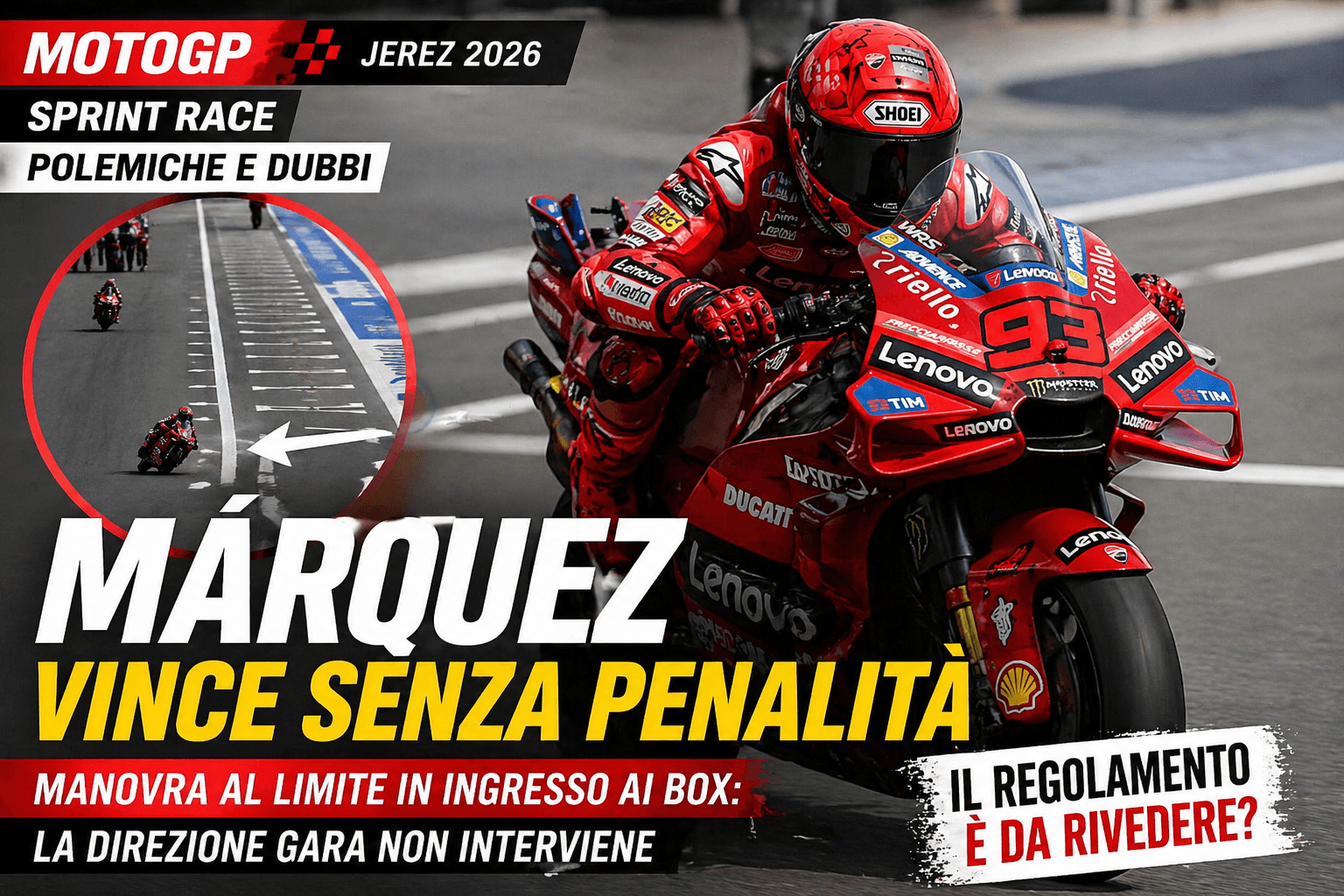
The Sprint Race of the 2026 Spanish Grand Prix at the Circuito di Jerez-Ángel Nieto saw Marc Márquez triumph once again, but the Spaniard's success is set to be talked about for a long time. More than for the pure performance, unquestionable from a technical point of view, what is dominating the conversation is the decisive manoeuvre carried out close to the entrance to the pit lane, deemed legal by Race Direction but right on the edge of the regulatory interpretation.
In a championship like MotoGP, where every detail can make the difference, the episode immediately split the paddock between those who praise the rider's tactical intelligence and those who instead call for an urgent overhaul of the regulations.
The key moment: a grey area in the regulations
The action under scrutiny
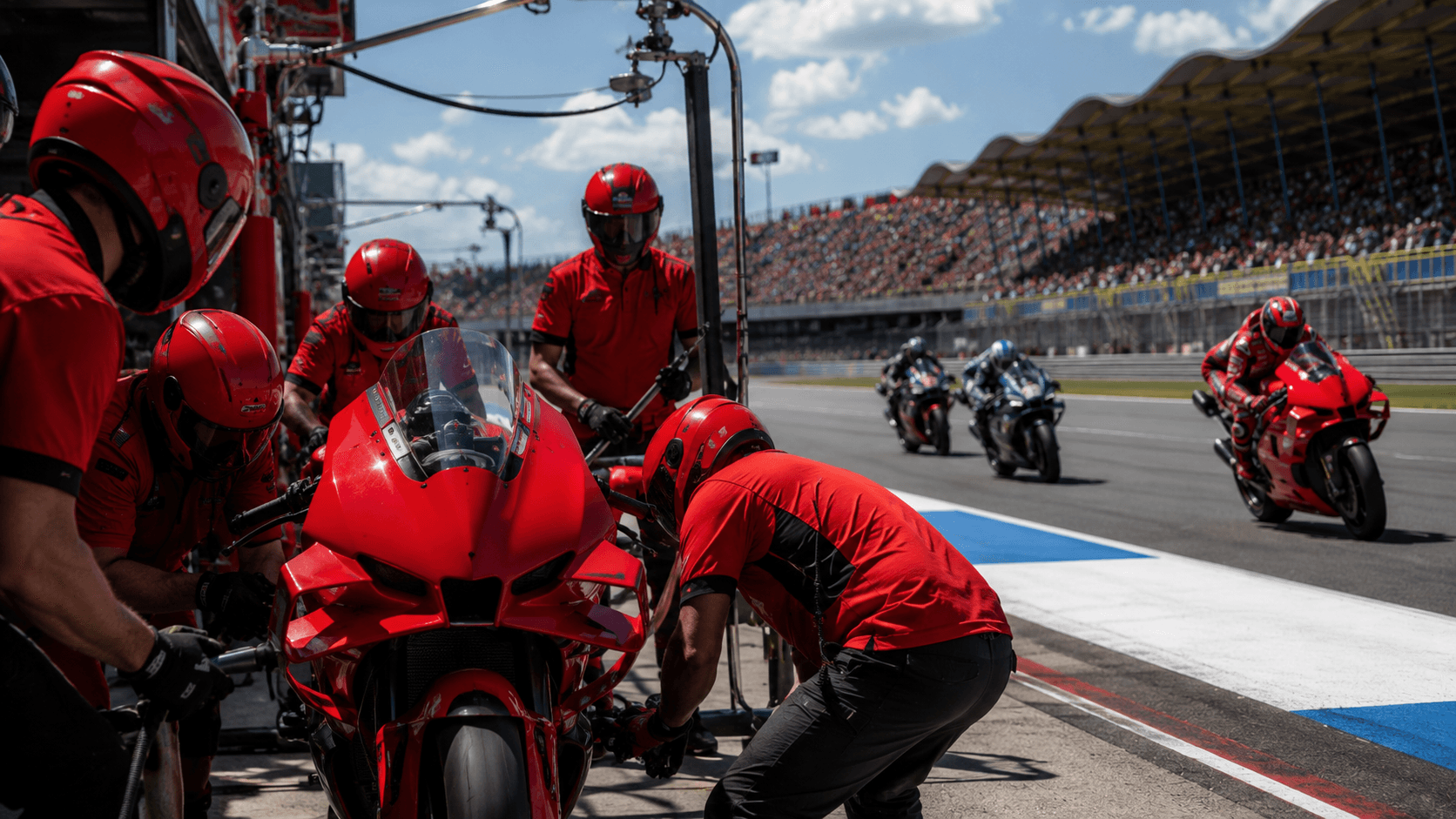
The sequence is now clear: Márquez, at the crucial moment of the race, used a particular line at the entrance to the pit lane, anticipating the point of entry and gaining a decisive advantage. The manoeuvre, while appearing irregular to many observers, was not sanctioned because it does not explicitly breach any written rule.
This aspect has highlighted a regulatory loophole. The current provisions do not define some borderline situations precisely, leaving room for interpretations that experienced riders like Márquez know how to exploit with cool heads.
Race Direction's position
According to reports, the stewards analysed the episode without finding any obvious breaches. The decision not to penalise the Spaniard is based precisely on the absence of a clear prohibition relating to that specific manoeuvre.
A choice that, while on the one hand protecting regulatory consistency, on the other raises questions about sporting fairness.
The statements: between defence and controversy
Márquez: “I exploited what is allowed”
In the aftermath of the race, Márquez firmly defended his action, underlining how every rider must maximise the opportunities offered by the regulations.
“I didn't do anything illegal. I just used what the regulations allow. If there is an undefined area, it is part of the game to interpret it,” the Spanish rider reportedly told the media present.
Words that reflect the mentality of a champion, but which inevitably fuel the debate.
The rivals' reactions
Several riders expressed reservations. Some, while avoiding direct controversy, underlined the need for greater regulatory clarity. Others, meanwhile, hinted that a similar manoeuvre could be repeated, opening up potentially controversial scenarios in the next races.
There is a certain tension in the paddock: the fear is that similar episodes could influence the outcome of competitions in a way that is not entirely merit-based.
A precedent that could change the season
The emulation risk
The lack of a penalty inevitably creates a precedent. In such a competitive championship, it is reasonable to expect that other riders may attempt similar strategies, exploiting the same regulatory gap.
This scenario puts pressure on MotoGP's decision-making bodies, which are called upon to intervene quickly to avoid divergent interpretations.
Towards a revision of the rules?
It is likely that the Márquez case will be discussed at the next Grand Prix Commission meetings. The aim will be to clarify the operational limits in similar situations, ensuring consistency of judgement and greater transparency.
In the meantime, the Spaniard's victory remains official, but it is accompanied by a cloud of controversy that could influence the rest of the season.
Between brilliance and controversy
Marc Márquez's success at Jerez perfectly represents the fine line that separates talent from the extreme interpretation of the regulations. In a context where every millimetre counts, the ability to read the rules becomes an integral part of performance.
It remains to be seen whether MotoGP will choose to intervene to fill this loophole or whether, on the contrary, it will leave room for a new strategic dimension to races. In any case, the debate has only just begun.