Sudden retirement for Bagnaia: what happened in the Spanish GP
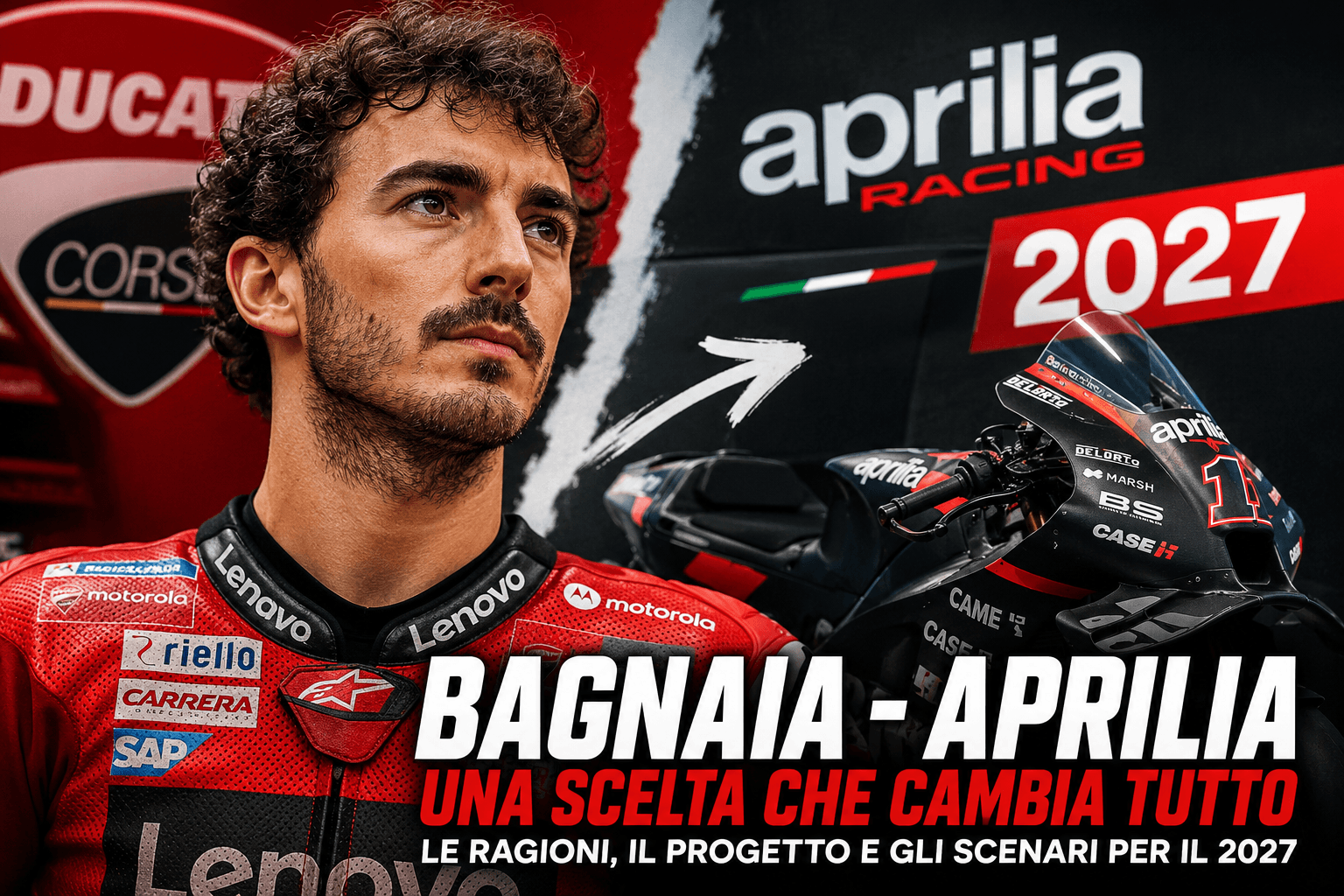
The 2026 MotoGP Spanish Grand Prix leaves Ducati with more questions than answers. Francesco Bagnaia’s retirement on lap 13, while he was fully managing the race, was one of the key moments of the Jerez weekend. A sudden exit, with no crash and no contact, which immediately put the spotlight on a possible technical issue.
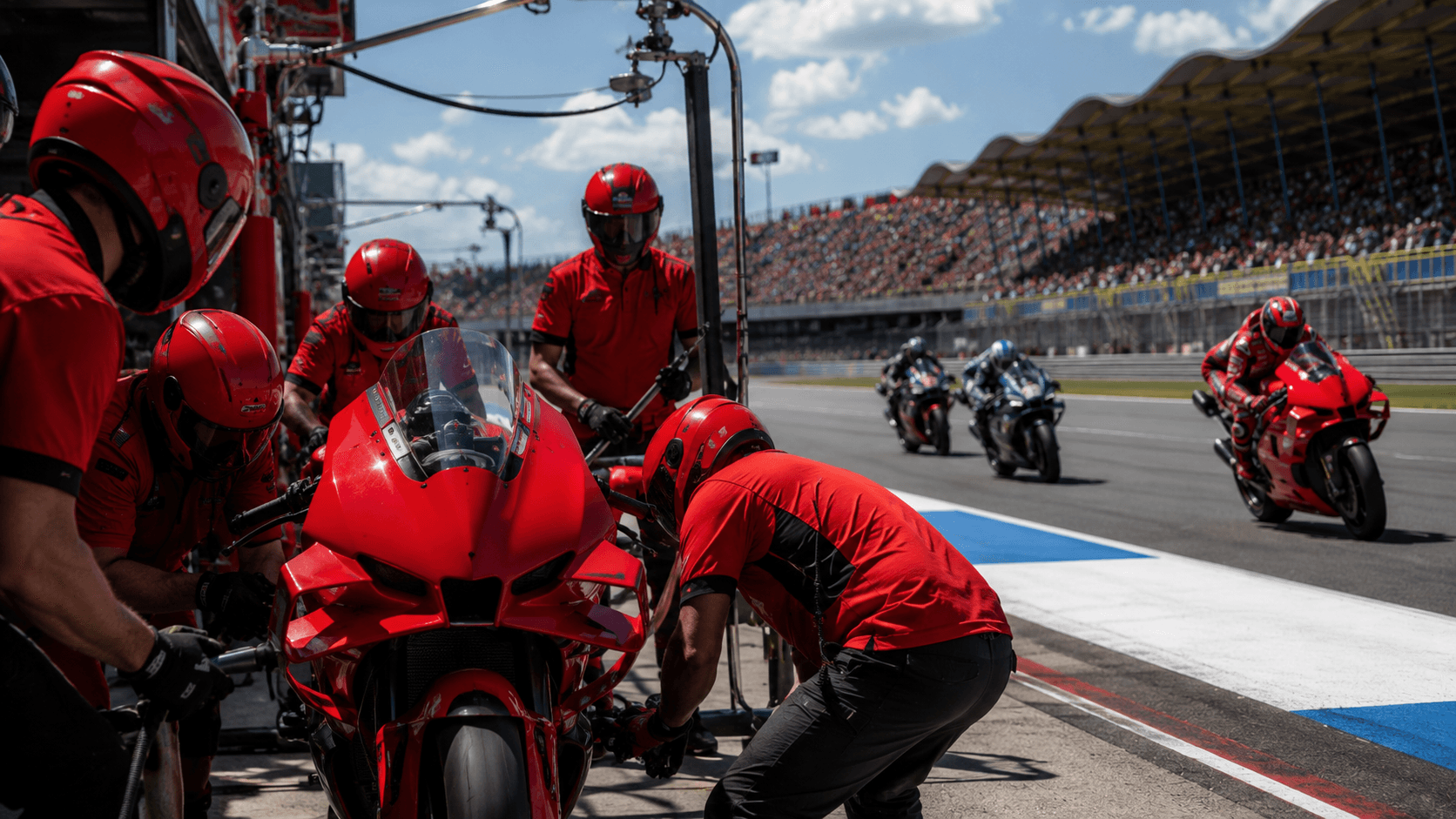
The Italian world champion, after a regular start, began to lose competitiveness progressively, until the decision to return to the pits. It was a forced choice, taken lap after lap, which avoided greater risks but inevitably compromised the result.
The technical issue: braking difficulties and compromised feeling
The heart of the problem seems to be linked to the front end of the Desmosedici, a crucial element on a technical circuit like Jerez. Bagnaia felt an unusual sensation under braking from the early stages, with increasing difficulty in managing braking and corner entry.
As the laps went by, the problem worsened, making the bike increasingly less precise and, above all, more difficult to control at the most demanding points of the circuit. In MotoGP, when you lose feeling at the front, the safety margin is drastically reduced. Continuing in those conditions would have meant exposing him to a real risk of crash.
The first internal analysis points to a sudden anomaly, not detected before the start, which could concern several aspects: from the front tyre to components linked to the braking system or the fork. However, Ducati preferred not to go into detail, leaving the issue still open.
Ducati between caution and communication strategy
The silence of the Borgo Panigale team has not gone unnoticed. The choice to limit itself to a generic reference to an “front-end issue” can be read in strategic terms, especially in a championship where every technical piece of information can make the difference.
At the same time, it cannot be ruled out that the nature of the problem requires more in-depth analysis before an official statement. The data collected during the race and the post-event checks will be essential to clarify the origin of the fault.
Bagnaia, for his part, maintained a clear-headed approach, stressing that it was an unusual and difficult-to-replicate situation. The rider pointed out that the problem was already noticeable at the start, but quickly worsened, making retirement unavoidable.
A weekend of two halves for Ducati
The retirement in the long race stands in sharp contrast to what was seen in the Sprint Race, where Bagnaia had shown solidity and competitiveness, taking an important result. This makes Sunday’s episode even harder to interpret.
Ducati, which arrived in Jerez with top ambitions, instead leaves with a haul below expectations and a technical unknown to solve. The up-and-down performance highlights how fine the balance is between performance and reliability in modern MotoGP.
Impact on the 2026 MotoGP championship
In World Championship terms, the retirement weighs heavily. In a season that promises to be extremely hard-fought, losing points in a key race can have a significant impact on the standings.
Bagnaia now has to chase, while direct rivals have the opportunity to gain ground. However, the priority remains understanding and solving the technical problem to prevent similar episodes from happening again.
Decisive tests and upcoming races
Attention is already on the next tests, which are crucial to analyse in depth what happened and restore the rider’s full confidence in the front end of the Desmosedici. Jerez, with its technical characteristics, provides an ideal test bed to check any solutions.
The 2026 MotoGP World Championship is still long, but episodes like the one in Jerez can mark a turning point. Ducati and Bagnaia are called upon to react immediately, turning a difficult weekend into a starting point.
The final verdict will come on track, where every detail counts. And where, once again, everything will be decided by that fine balance that comes from the front end.