The Catalan GP turns into a MotoGP case
The 2026 Catalan Grand Prix left behind much more than a race interrupted by two red flags. At Montmeló, a debate that had been simmering in the paddock for some time has been reopened forcefully: are modern MotoGP bikes reaching levels of speed and aggression such as to put even historic circuits, considered until a few years ago perfectly suitable for the premier class, under strain?
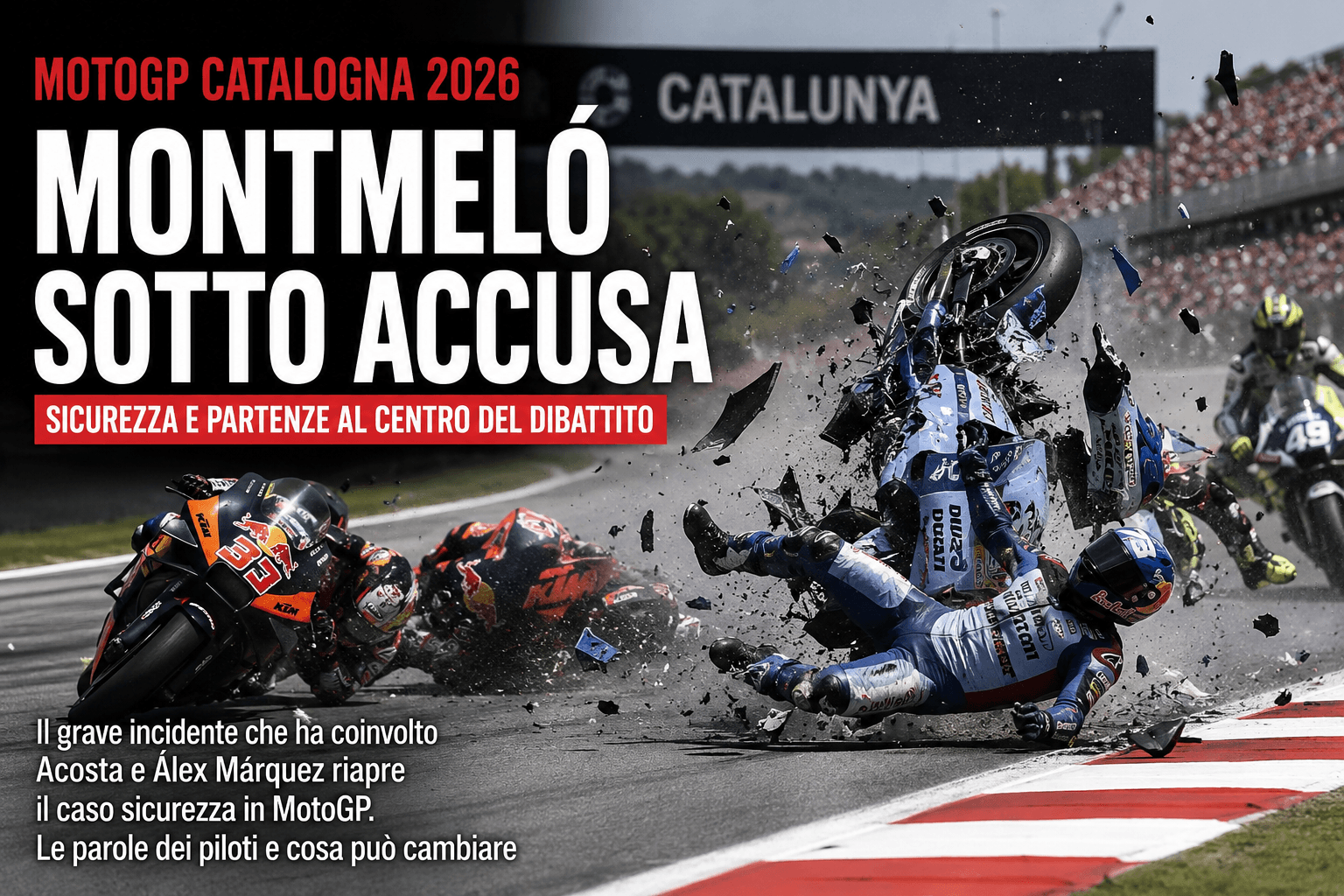
The crash involving Pedro Acosta, Álex Márquez and Fabio Di Giannantonio shook riders, teams and insiders. Images of the crash on the straight towards Turn 10 showed all the fragility of an increasingly delicate balance between spectacle and safety.
Acosta was leading the race at an impressive pace when his KTM suddenly slowed due to a technical problem. Behind him Álex Márquez was completely in his slipstream and did not have enough time to avoid contact. The impact was extremely violent and generated an uncontrollable sequence of debris and bikes on the racing line that also involved Di Giannantonio.
Race control immediately showed the red flag, but in the paddock the issue quickly moved beyond the dynamics of the crash. The real question concerns the ability of current circuits to contain the performance of modern MotoGP bikes.
Why the start at Montmeló came under the spotlight
Modern MotoGP bikes compress the field like never before
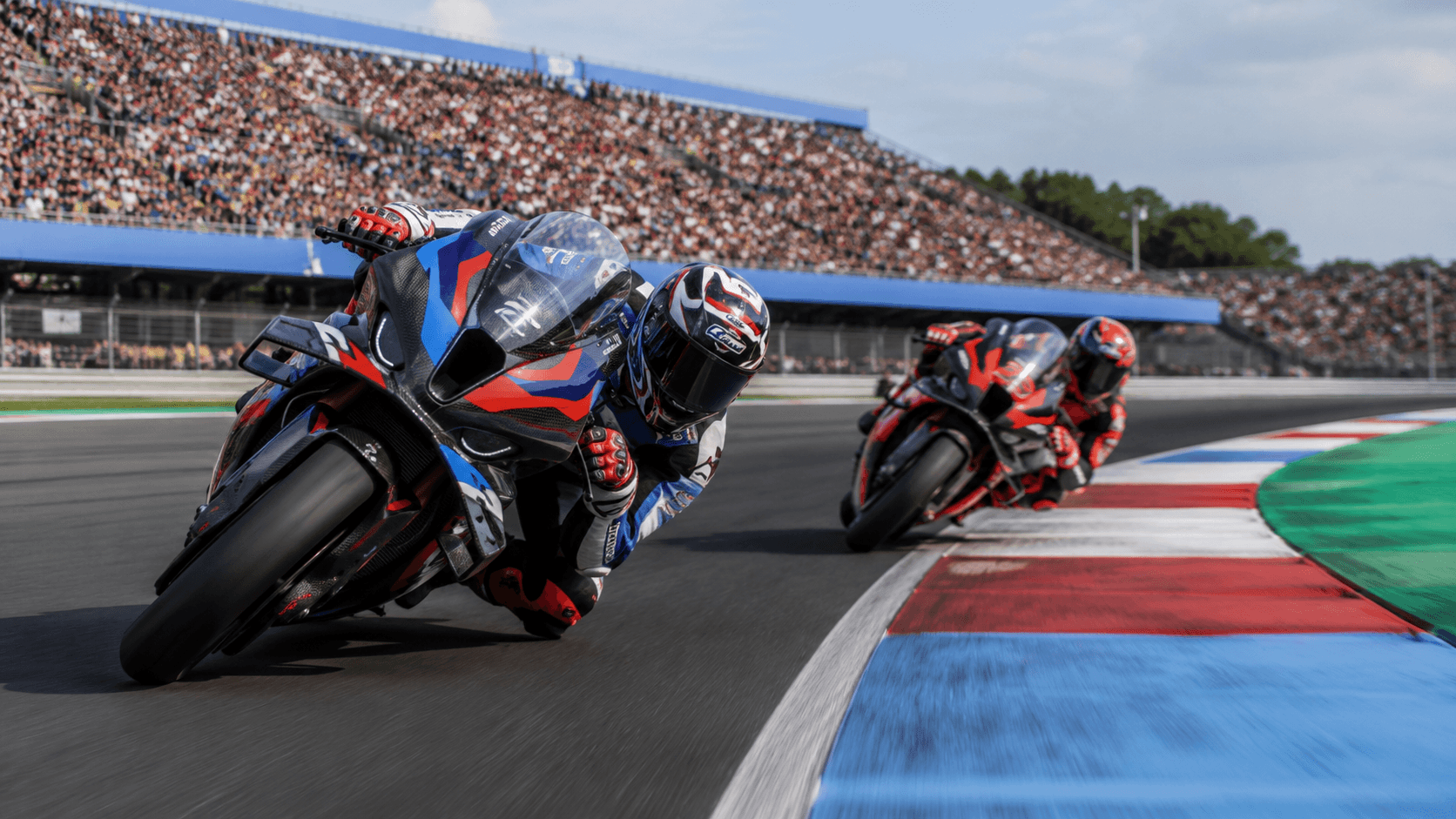
In Barcelona the problem is not just outright speed. The critical point is the combination of aerodynamics, slipstream and acceleration. The 2026 MotoGP bikes remain bunched together for much longer than in the past and arrive at the big braking zones with minimal differences in space and speed.
The long straight on the Catalan track further amplifies this phenomenon. At the start or in the first laps the field compresses to the point of creating an extremely dangerous bottleneck effect. A slight change in speed or a sudden fault is enough to turn a normal situation into a devastating accident.
And that is exactly what happened in the contact between Acosta and Márquez.
Several riders had already expressed concern during the weekend about the behaviour of the bikes in the early stages of the race. The presence of the Sprint Race has made the starts even more aggressive, increasing the number of overtakes and moves on the limit already in the first metres.
Turn 1 and the big braking zones become a problem
In the paddock there is growing conviction that some historic tracks have been overtaken by the technical evolution of MotoGP. Montmeló is one of the clearest examples: long straights, very high speeds and violent braking zones create situations that are increasingly difficult to control.
Current MotoGP bikes comfortably exceed 360 km/h and make use of aerodynamic downforce that makes the slipstream extremely powerful. Riders therefore arrive at the braking zones fully attached to each other, with reaction margins reduced to a minimum.
According to several figures in the world championship, the risk does not only concern crashes in corners, but above all what can happen on the straights when a bike suddenly loses speed.
The riders' words increase the pressure on MotoGP
Bagnaia and Martín call for greater attention
In the days before the race Francesco Bagnaia had already tackled the safety issue, talking about the speeds reached by modern MotoGP bikes and the need to update some structures at historic circuits. Jorge Martín had also highlighted how certain tracks are becoming increasingly difficult to manage with the current bikes.
After the Montmeló chaos the tone of the statements became even harsher. In the paddock there is a feeling that the World Championship has reached a turning point.
Many riders believe that the technical evolution of MotoGP has been faster than the adaptation of the circuits. Aerodynamics, ride-height devices and increasingly violent accelerations have completely changed the dynamics of the races, especially in the early stages.
Álex Márquez and the fear after the impact
The crash involving Álex Márquez deeply affected the paddock because of the way it unfolded. The Spaniard found himself in front of a bike that had suddenly slowed while he was travelling in full slipstream and at very high speed. In such a situation the reaction time is reduced to practically zero.
That is exactly the point that worries the riders most. Today MotoGP bikes allow you to stay extremely close even above 300 km/h, but in the event of a technical problem or sudden crash it becomes almost impossible to avoid contact.
The risk, according to many, is that similar episodes could happen again with even more serious consequences.
MotoGP safety, Montmeló could become a turning point
Does MotoGP need to rethink tracks and regulations?
The Catalan Grand Prix could have important effects on the future of MotoGP. Dorna, FIM and the Safety Commission will be called upon to assess possible changes both from a technical point of view and in terms of circuit safety.
Topics set to enter the debate include the management of starts, the aerodynamic effect of slipstreams and the layout of the big braking zones on historic circuits. Some riders are calling for structural changes to tracks, while others believe it is necessary to limit certain technical solutions that make the bikes too fast and too stable on the straights.
The Montmeló case has above all highlighted a now obvious reality: modern MotoGP is racing at a speed higher than was imagined when many championship tracks were designed.
The precedent of Luis Salom remains in the paddock's memory
Barcelona still carries the weight of the tragedy of Luis Salom in 2016. After that episode the circuit had been modified and adapted in several respects, but the 2026 weekend shows how the safety issue is constantly evolving.
Today's MotoGP bikes are simply different from the past. Faster, more aggressive and much more compact in the pack.
For this reason the drama experienced at Montmeló risks representing much more than a race incident. It could be the moment when MotoGP will be forced to redefine its future before the limit is definitively exceeded.