7 April 2002 is no ordinary date for motorcycling: it is the day the MotoGP class is officially born and, as with any great beginning, there is an indelible signature. That of Valentino Rossi.
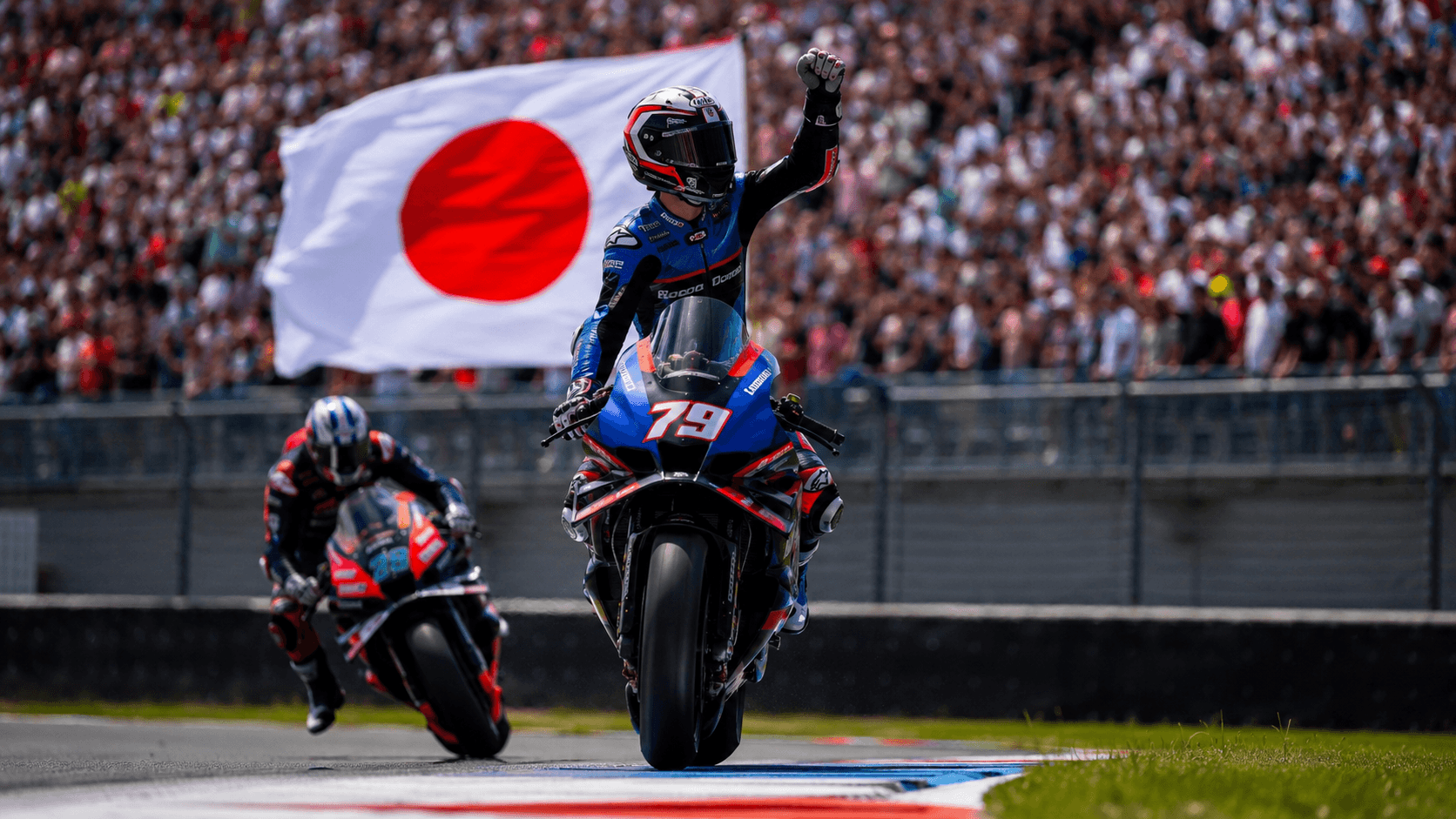
On the legendary Suzuka Circuit, the champion from Tavullia dominates the first race of the new era, writing a page destined to become legend.
The context: the MotoGP revolution
2002 marks a momentous turning point. The old 500 two-stroke class gives way to 990cc four-stroke prototypes: more power, more technology, more spectacle. It is the birth of modern MotoGP.
In this scenario of change, Rossi arrives as the reigning world champion in the 500, already regarded as the purest talent in the paddock. But the real unknown is the new bike: the revolutionary Honda RC211V.
The race: Rossi dominates
The opening race leaves no room for doubt. Rossi makes a strong start, immediately sets the pace and manages the race with absolute authority. Behind him, top-level rivals – from Max Biaggi to Loris Capirossi – are forced to chase.
The result is clear: victory, fastest lap and an unmistakable message to the entire world. MotoGP has begun, and its first king already has a name.
A symbol that goes beyond victory
That victory is not just a sporting success. It is a symbolic moment:
it seals the definitive shift to the new technological era
it establishes Rossi as the global face of motorcycling
it opens a season that will see him dominate the championship
In 2002, in fact, Rossi will claim his first MotoGP title, his fourth consecutive world title, consolidating a supremacy destined to define an era.
The legacy of that 7 April
More than twenty years later, that race remains a watershed. Today's MotoGP – made up of advanced electronics, extreme aerodynamics and fierce competition – was born there, at Suzuka.
And it was born with a leading figure: Valentino Rossi, capable of turning a rule change into the perfect stage for his greatness.
That 7 April 2002 is not just the start of a season.
It is the beginning of a modern legend.