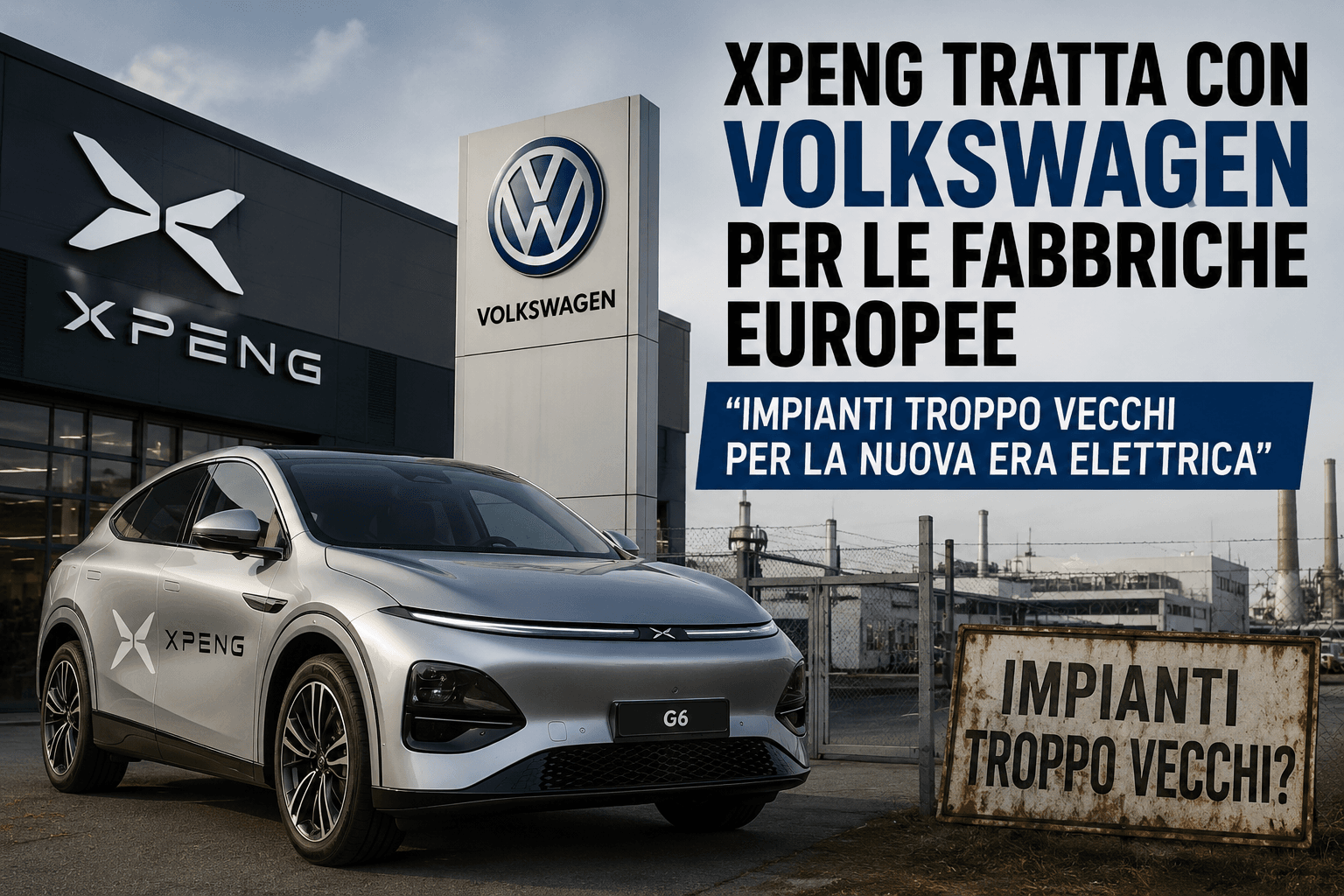
The future of the European electric car could hinge on an agreement destined to change the balance of the entire automotive sector. XPeng and Volkswagen are in fact said to be discussing the use of some of the German group’s production facilities in Europe, but the first reports already point to an issue destined to spark debate: according to executives at the Chinese company, several European factories would now be “too old” to meet the production standards required by the new generation of electric vehicles.
A statement that perfectly captures the historical moment the global automotive industry is going through, with Chinese brands increasingly taking centre stage and European manufacturers called on to catch up technologically and industrially.
XPeng targets Europe: local production to challenge Tesla and BYD
XPeng’s goal is clear: to strengthen its presence in the European market by reducing logistics costs, delivery times and the impact of tariffs on electric cars produced in China.
In recent months the Asian manufacturer has accelerated its expansion plan in Europe, increasing its commercial presence in Germany, Scandinavia, France and Italy. Models such as G6 and G9 represent the spearhead of a strategy built on advanced technology, sophisticated software and competitive prices.
To make the definitive leap, though, a European production base is needed. And this is where Volkswagen comes in.
The German group, already a strategic partner of XPeng in China after the industrial agreements signed in recent years, could make some currently underused plants available. A solution that would allow Wolfsburg to reduce the problem of overcapacity without resorting to traumatic closures.
“Old factories”: XPeng’s message to European industry
The phrase attributed to XPeng managers has had a strong impact in the automotive sector. Describing some Volkswagen plants as “old” does not simply mean criticising outdated facilities, but highlighting the technological gap that is emerging between Europe and China in the production of electric cars.
The new EV platforms developed by Chinese manufacturers in fact require extremely modern, automated and digitalised production lines. The integration between software, batteries and 800 Volt architectures imposes much faster and more flexible industrial processes than those traditionally used in the era of combustion engines.
In recent years China has invested enormously in building state-of-the-art plants, designed directly around electric vehicles. In Europe, by contrast, many plants stem from facilities built for completely different forms of production and now need deep upgrades.
Volkswagen between the electric market crisis and industrial relaunch
For Volkswagen the factories dossier has become central. The slowdown in European demand for electric cars, combined with aggressive Chinese competition, is forcing the German group to rethink its industrial strategy.
Several European plants are in fact operating below full production capacity and the issue of the economic sustainability of the facilities has now become firmly embedded in the group’s internal debate.
Any agreement with XPeng could become a strategic solution for both companies. On the one hand Volkswagen would be able to keep some production facilities operational; on the other the Chinese brand could accelerate its European foothold without having to build new plants from scratch.
However, the issue of the investments needed to modernise the production lines and make them compatible with the most advanced electric platforms remains.
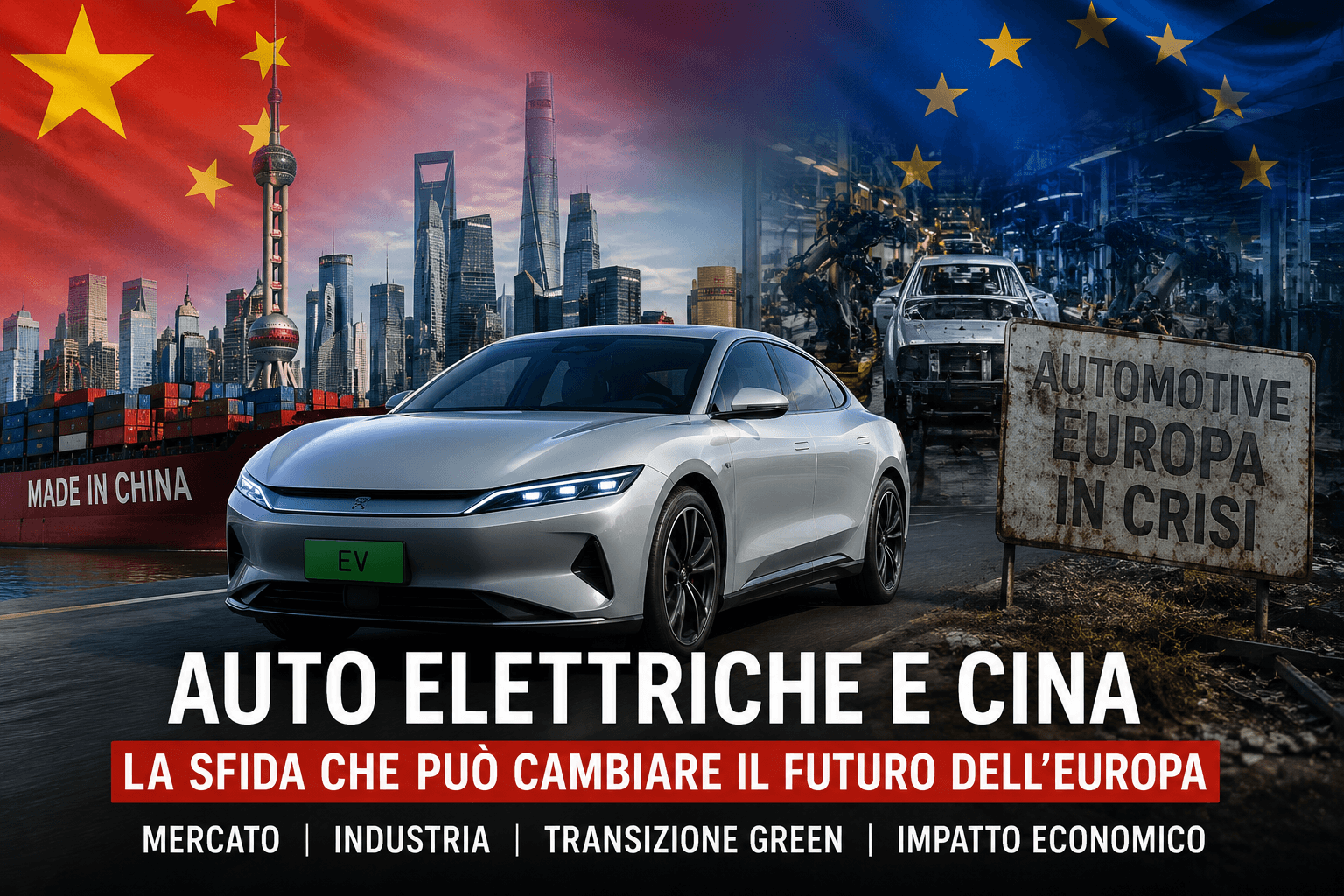
The Chinese challenge changes the face of the global automotive industry
The possible axis between XPeng and Volkswagen tells much more than a simple industrial negotiation. It is the symbol of an epoch-making change that is redefining the balance of power in the automotive sector.
For decades it was European brands that exported technology and expertise to the Chinese market. Today, instead, it is Chinese manufacturers that are imposing new production standards thanks to shorter development times, more modern factories and extremely advanced software management.
XPeng represents a new generation of companies born directly in the electric era, without the industrial weight of the past. A feature that today allows Chinese brands to move with greater speed than the historic European giants.
The coming weeks will be decisive in understanding whether the talks will concretely enter the operational phase. But regardless of the final outcome, one thing already seems clear: the challenge of the global electric car is no longer fought solely on the product, but above all on the speed of industrial innovation.