Reality told a different story.
The technological evolution of batteries and energy recovery systems has allowed electric cars to make impressive progress in relatively short times. Today the most advanced cars are able to recover a significant amount of the energy used during the race, turning braking and deceleration into precious resources for performance.
This change has also altered the role of the driver. If in traditional competitions the limit is often represented by tyre or fuel management, in electric races the ability to manage the energy available has become one of the key skills for achieving results.
From experimentation to technological maturity
The growth of electric motorsport does not concern only the speed of the cars. What stands out most is the level of sophistication reached by the electronic systems that control every phase of the race.
The intelligence of the energy management software now makes it possible to optimise the distribution of power corner after corner, adapting the strategy to the track conditions and the opponents. A situation that makes racing increasingly similar to a game of chess at very high speed.
For this reason, many drivers stress that electric races require a different preparation compared with the traditional categories. It is not enough to be fast: you have to be efficient.
The main motorsport events with electric cars
Formula E: the benchmark for electric competition
The championship that changed the perception of electric racing
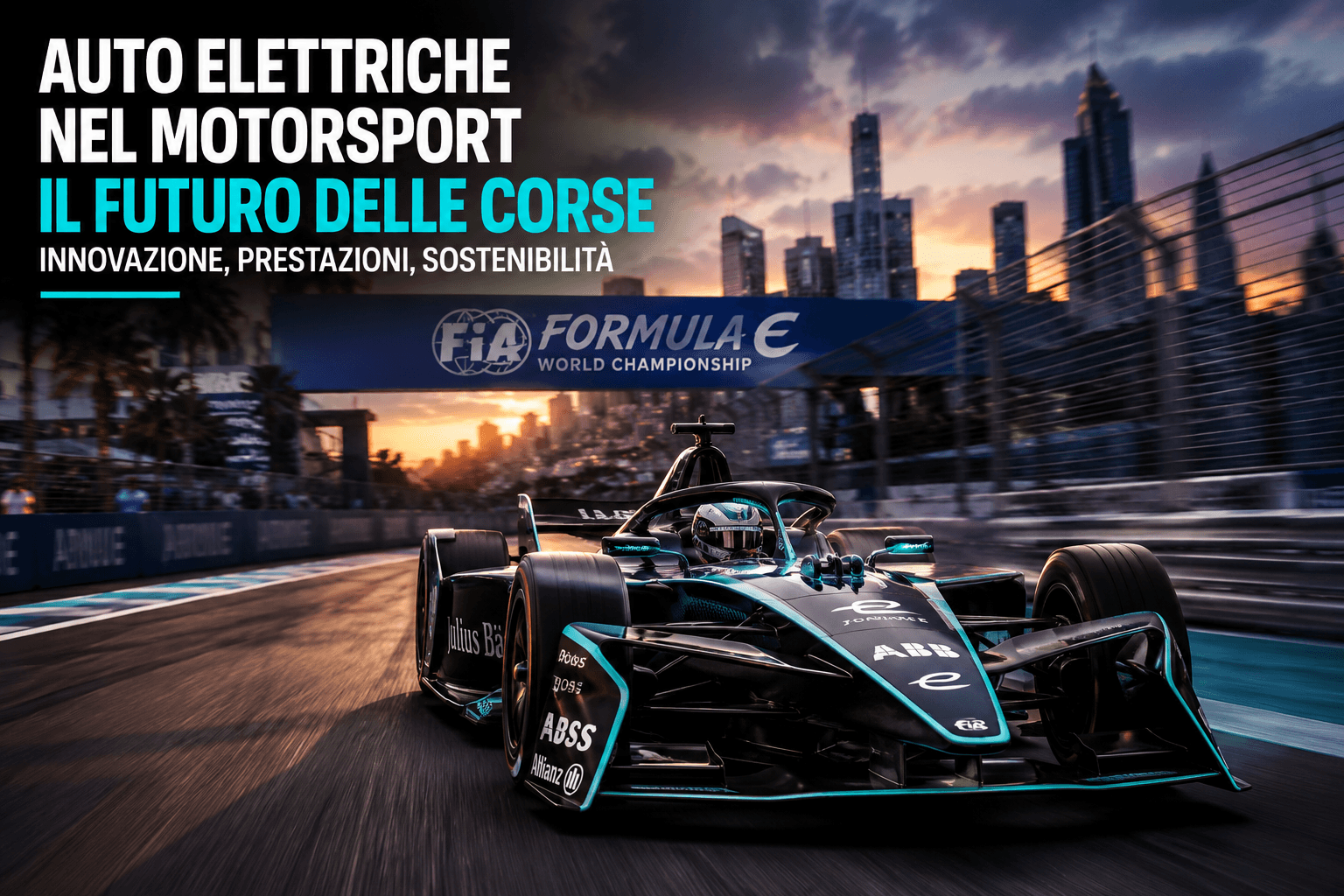
If there is one category that has helped transform the image of electric motorsport, that is undoubtedly Formula E.
Created with the aim of promoting new sustainable technologies, the series has over time managed to attract top manufacturers and drivers from the main international categories. Today the championship is one of the most important proving grounds for the development of high-performance electric systems.
The latest-generation cars have reached levels of efficiency that were unthinkable just a few years ago. The amount of energy recovered during a race has increased significantly, while outright performance continues to grow season after season.
The new generations of cars promise a revolution
The next technological developments could represent the biggest leap in the category's history.
The future cars are designed to offer more power, even higher acceleration and increasingly refined energy management. The aim is to bring the performance of electric cars even closer to that of the most prestigious categories in world motorsport.
According to many insiders, the next decade could be the one in which electric racing finally establishes itself as the benchmark discipline for technological innovation.
Advantages of electric cars in motorsport
Immediate performance and instant acceleration
One of the most appreciated aspects of electric cars is the immediate availability of torque. Unlike combustion engines, which need to reach certain revs to deliver their maximum potential, electric power units are able to provide all their force from the very first instant.
This translates into extremely rapid acceleration and an immediate response to the driver's inputs.
In modern competition, where every thousandth can make the difference, this feature represents a technical advantage of absolute significance.
Motorsport as a laboratory for future cars
Historically, racing has always anticipated innovations destined for production cars. It happened with disc brakes, with aerodynamics and with composite materials. It is happening now with electrification.
The more efficient batteries, the energy recovery systems and the fast-charging technologies developed in competition are helping to accelerate the progress of the entire automotive sector.
Many of the solutions we see on track today could become standard on road cars within a few years.
Future prospects for electric cars in motorsport
Electrification is changing all of motorsport
Formula 1 is also going through a phase of deep technical transformation. The new regulations foresee an increasingly important role for electric systems and energy recovery, partly bringing the category's philosophy closer to that developed over the years by Formula E.
The differences between the two disciplines remain significant, but the underlying principle is now shared: performance no longer depends only on the power available, but on the ability to use every unit of energy in the most efficient way possible.
For many engineers, this convergence is the clearest proof of how much electric motorsport has influenced the entire sector.
Drivers look with interest at the new generation of technologies
Among those involved in racing too, awareness is growing that the future will inevitably pass through electrification.
The latest generations of drivers are increasingly used to working with advanced software, complex energy strategies and power recovery systems. A cultural change that is modifying the very concept of sporting driving.
The ability to interpret data and manage the resources available has become as important as pure talent behind the wheel.
The future of electric cars in motorsport
More powerful batteries and ultra-fast charging
The next challenge concerns batteries above all.
The manufacturers' aim is to increase energy density, reduce weight and drastically cut charging times. The progress achieved in recent years suggests that these goals could be reached much earlier than expected.
Greater efficiency would make it possible to develop even more spectacular competitions, eliminating some of the limitations that currently characterise electric categories.
The future of racing will be electrified
Thinking that electric cars will completely replace traditional engines in the short term would probably be a mistake. Motorsport will continue to be an ecosystem rich in different technologies, where combustion engines, hybrid systems and electric systems will coexist for many years to come.
However, the direction taken is now clear.
Electric competitions are no longer a simple alternative, but a fundamental part of the sector's technological development. The innovations emerging today on the tracks will influence the global automotive market, helping define the mobility of the future.
And if motorsport has always been a privileged glimpse of what will happen tomorrow on the roads, then the message coming from tracks around the world is unequivocal: the future of racing will be ever faster, ever smarter and inevitably ever more electric.