The car market is going through the most radical transformation of the last fifty years
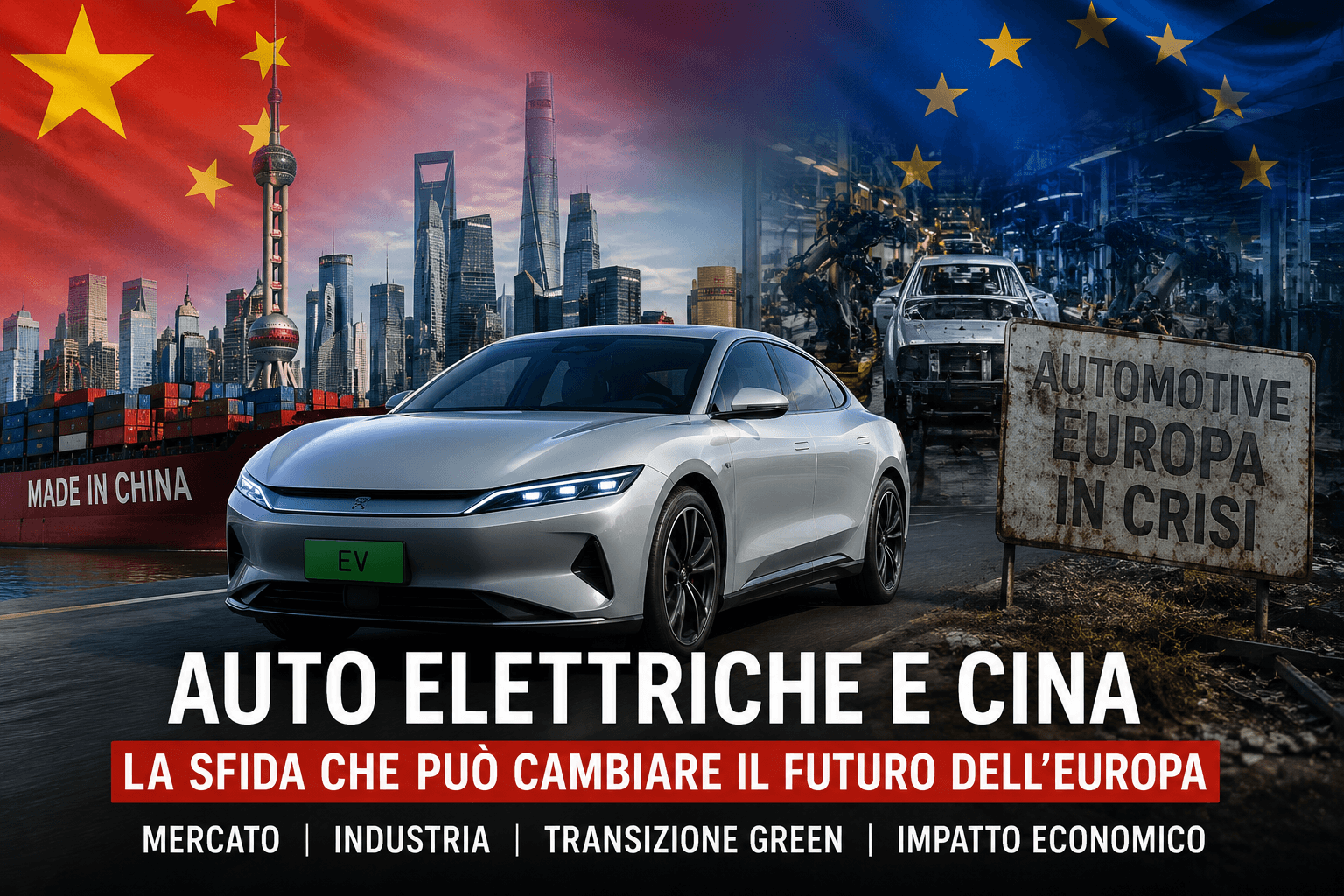
There is a question that in recent months has moved out of boardrooms and into public debate: does the shift towards the electric car really represent an opportunity for Europe, or does it risk turning into a competitive advantage for China?
The answer is not simple. On the one hand there is the need to reduce emissions and speed up the path towards more sustainable mobility. On the other, an industrial reality is emerging that is changing at an impressive speed and that sees the Asian giant playing an increasingly leading role.
The car is not just a means of transport. In Europe it is one of the economy’s strategic sectors, involving millions of workers, thousands of companies and a supply chain that contributes significantly to the gross domestic product of several countries. For this reason, the electric revolution is not being viewed solely from an environmental perspective, but also through the lens of industry, employment and international competitiveness.
How China became the queen of electric cars
A strategy built with a twenty-year head start
While many Western manufacturers continued to invest mainly in combustion engines, China began well in advance to build its leadership in the technologies deemed fundamental for the future of mobility.
The result is plain for all to see. Today the country controls a significant share of global battery production, dominates numerous stages of the supply chain for strategic raw materials and is home to some of the most aggressive brands in the automotive sector.
It is not just about production volumes. Chinese companies have developed an ability to innovate and a speed of execution that are putting many historic European manufacturers in difficulty. Development times for new models have been drastically cut and price competitiveness continues to be one of the main strengths of Asian manufacturers.
The advantage that comes from the integrated supply chain
One of the elements that explains China’s success is direct control of much of the production chain. Batteries, electronic components, software and raw materials are often developed within an integrated industrial ecosystem that makes it possible to cut costs and production times.
This model has allowed Chinese companies to come to market with products that are competitive both technologically and economically, steadily increasing their presence in Europe as well.
The paradox of the green transition
The main factory of green technologies remains one of the biggest emitters of CO₂
It is precisely here that one of the most heated debates of recent years has emerged.
China is today the world’s leading producer of electric cars, batteries and solar panels, but it also remains the largest global emitter of carbon dioxide. A significant share of its industrial production is still powered by coal, an energy source that is one of the main drivers of global emissions.
This scenario fuels criticism from those who believe it is contradictory to import technologies intended for decarbonisation from a production system that continues to make extensive use of fossil fuels.
The issue is particularly delicate because it shifts the focus from the simple use of the car to the vehicle’s entire life cycle. If while running electric cars produce significantly lower emissions than traditional ones, their production requires energy-intensive industrial processes and a considerable amount of raw materials.
Pollution does not disappear, it changes geographic location
According to numerous observers, the risk is that part of the emissions will simply be transferred from one continent to another.
Europe is progressively reducing its industrial emissions while increasing imports of products made in countries where energy and environmental costs are different. A dynamic that raises questions about the real effectiveness of climate strategies if they are not accompanied by a global vision of production.
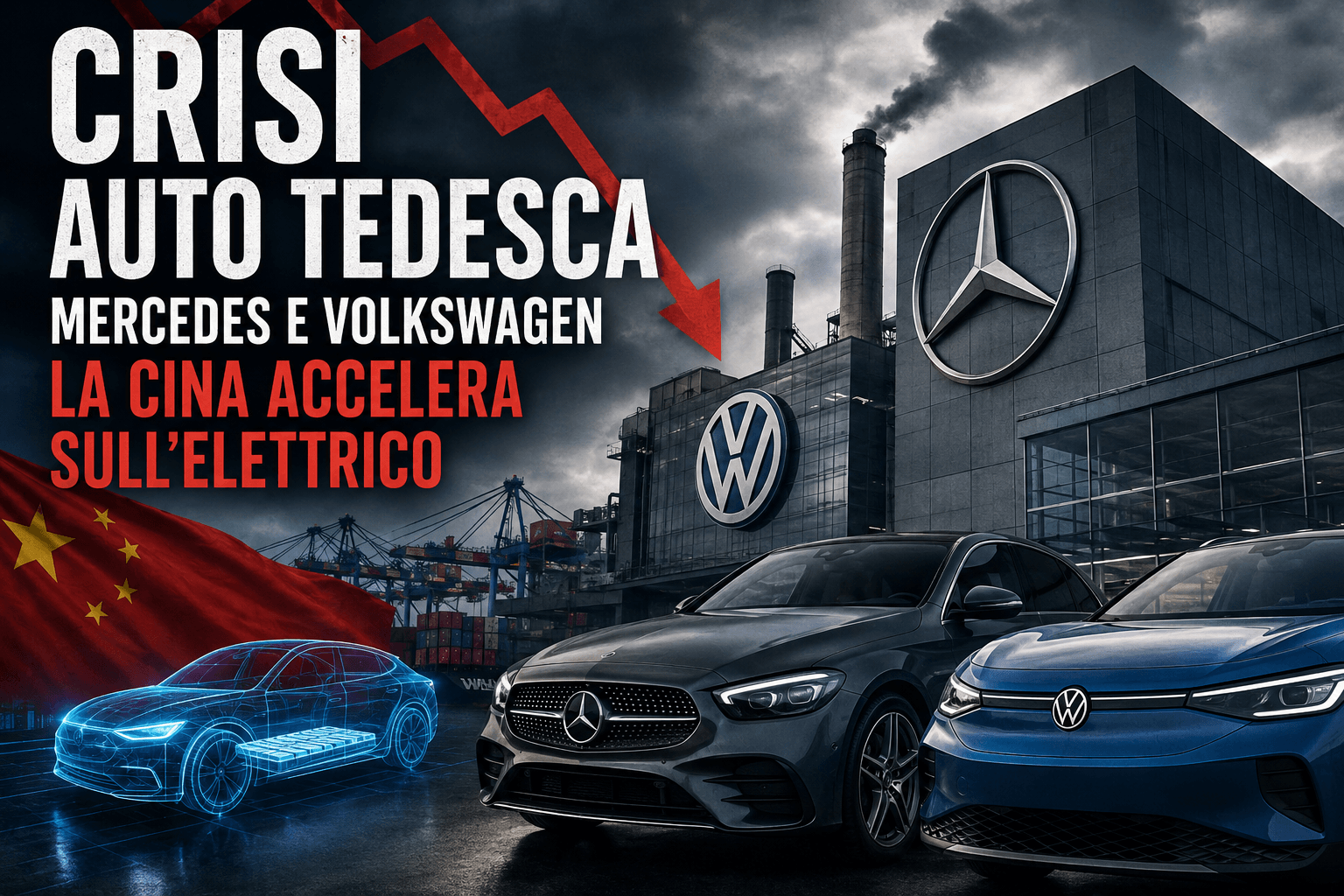
The European automotive crisis worries governments and manufacturers
A historic sector under pressure
The European automotive industry is currently facing an extremely complex phase. Environmental regulations require billion-euro investments to develop new electric platforms, while international competition continues to intensify.
Many manufacturers are undergoing a profound internal reorganisation, with the aim of reducing costs and speeding up the technological transition. Meanwhile, concern is growing for the future of numerous production sites and for the employment impact of a transformation that involves the entire supply chain.
The challenge does not concern car makers alone. It involves suppliers, component companies, research centres and thousands of small and medium-sized businesses that for decades have built the success of the European automotive industry.
Batteries are the new oil
If in the twentieth century competitiveness was linked to access to traditional energy sources, today the real battleground is batteries.
Whoever controls battery production controls a significant share of the value generated by the electric car. It is precisely in this segment that China has built its most important advantage, becoming the global benchmark for the entire industry.
For Europe, the challenge is to make up ground and develop an autonomous supply chain that can guarantee greater strategic independence and reduce dependence on imports.
From sustainability to geopolitics: the contest worth billions
The future of the car will be decided by the balance between environment and industry
The energy transition is not just an environmental issue. It is a challenge involving the economy, technology, employment and international relations.
In recent years the debate has often focused on the choice between combustion and electric power. In reality, the real issue is much broader and concerns countries’ ability to maintain industrial competitiveness within an increasingly technology-driven global market.
Europe is facing a crucial choice. Accelerating decarbonisation remains a priority objective, but at the same time it becomes essential to avoid the transition turning into a loss of production capacity and industrial leadership.
Electric cars, China and Europe: the next decade will be decisive
The coming years will show whether the continent will manage to turn the electric revolution into a new growth opportunity or whether it will see a progressive transfer of value towards the economies that invested earlier in the technologies of the future.
The feeling is that the contest has only just begun. Electric cars are only the tip of the iceberg of a global competition involving energy, innovation, raw materials and control of strategic supply chains.
And it is precisely on this ground that one of the most important economic challenges of the twenty-first century will be decided. Not just for the automotive industry, but for the future of the European economy itself.