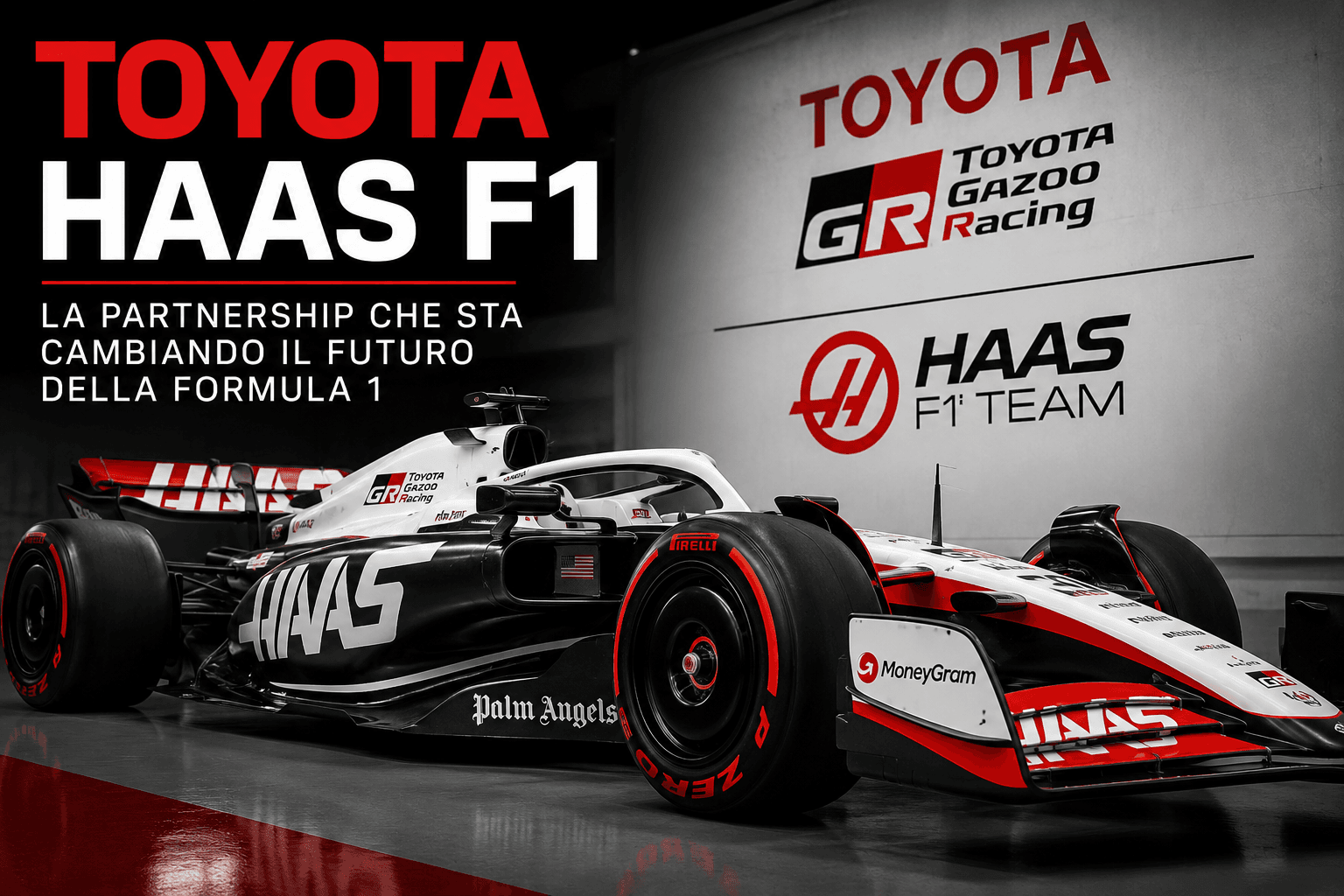
Toyota-Haas: an alliance that goes beyond simple technical collaboration
The most significant aspect of the partnership concerns the working method. Toyota Gazoo Racing has introduced more advanced processes, greater integration between departments and a technical philosophy that is decidedly more modern than the American team's recent past.
The Banbury base, in the United Kingdom, has become the centre of this evolution. Here Haas is investing in structures and technologies that until a few years ago seemed out of reach for a team with limited resources.
The simulator is the heart of the new Haas project
Among the key elements is the new driver-in-loop simulator, now an essential tool in contemporary Formula 1. The top teams use it daily to develop set-ups, analyse aerodynamic updates and prepare every race weekend in detail.
For Haas, it represents a strategic breakthrough. In the past the team had often paid for the technological gap to direct rivals, while today it aims to gradually reduce that distance thanks to Toyota's engineering support.
The objective is clear: to make the team more competitive not only on track, but above all in its ability to develop the car quickly during the season.
The TPC programme changes the team's mentality
Another fundamental piece concerns the TPC programme, the “Testing of Previous Cars”, which has become increasingly central to the team's growth.
Thanks to the use of cars from previous seasons, Haas can increase track time, develop operating procedures and allow the drivers to accumulate experience without the limits imposed by contemporary testing regulations.
In recent months the team has intensified sessions at Silverstone, using the programme as a true platform for technical and organisational development.
It is not just a question of the kilometres covered. TPC also allows engineers to validate data, improve correlation with the simulator and optimise internal processes, aspects that today make the difference in Formula 1 almost as much as the pure speed of the car.
Ocon and Bearman back the new Haas era
The drivers have also felt the change. Esteban Ocon, called on to lead the project in a crucial phase of its growth, has repeatedly highlighted the leap in quality made by the team on the organisational and technical fronts.
The Frenchman spoke of a much better prepared and more ambitious structure than in the past, highlighting the work carried out behind the scenes to build solid foundations for the coming seasons.
These feelings are shared by Oliver Bearman, a young Ferrari talent set to represent the future of the American team. The Briton praised the quality of the technical environment he found at Haas, focusing above all on the attention to detail and the speed with which the team is evolving.
Important signs, because in Formula 1 internal perception often comes before results on track.
Ayao Komatsu is building a different Haas
Much of the credit is attributed to Ayao Komatsu. Since taking a central role in the running of the team, the Japanese engineer has progressively changed the operational approach.
The idea is no longer merely to survive in the midfield, but to create a modern structure capable of growing in the medium to long term.
The collaboration with Toyota fits perfectly into this philosophy. Haas wants to maintain its lean and efficient identity, but at the same time aims to raise the technological level and the quality of development.
It is a delicate balance, but the paddock is beginning to see the project with different eyes.
Is Toyota preparing a return to the summit of Formula 1?
Behind this operation there could also be a broader strategy from Toyota. After its official departure from Formula 1 in 2009, the Japanese brand has never hidden its interest in the World Championship, especially now that the budget cap makes the championship more economically sustainable.
The partnership with Haas allows Toyota to gradually re-enter the Formula 1 environment, gaining direct experience of the category's new technologies and operational dynamics.
In the paddock there is no shortage of those who speculate about even stronger involvement ahead of 2026, the year of the regulatory revolution that could completely reshape the technical balance of the World Championship.
Haas no longer wants to be Formula 1's backmarker
For years Haas has been seen as a team destined to fight at the back of the field. Today, however, the context appears different.
Infrastructure growth, Toyota support, technical strengthening and the arrival of high-profile drivers are changing the perception of the team within the paddock.
No one is yet talking about a future top team, but the Haas-Toyota project finally seems to have solid foundations on which to build.
And in a Formula 1 where organisation, simulation and development are worth almost as much as the engine, this could be only the beginning of a new story.