Austria becomes the first Formula 1 weekend of 2026 to activate the FIA’s Heat Hazard protocol
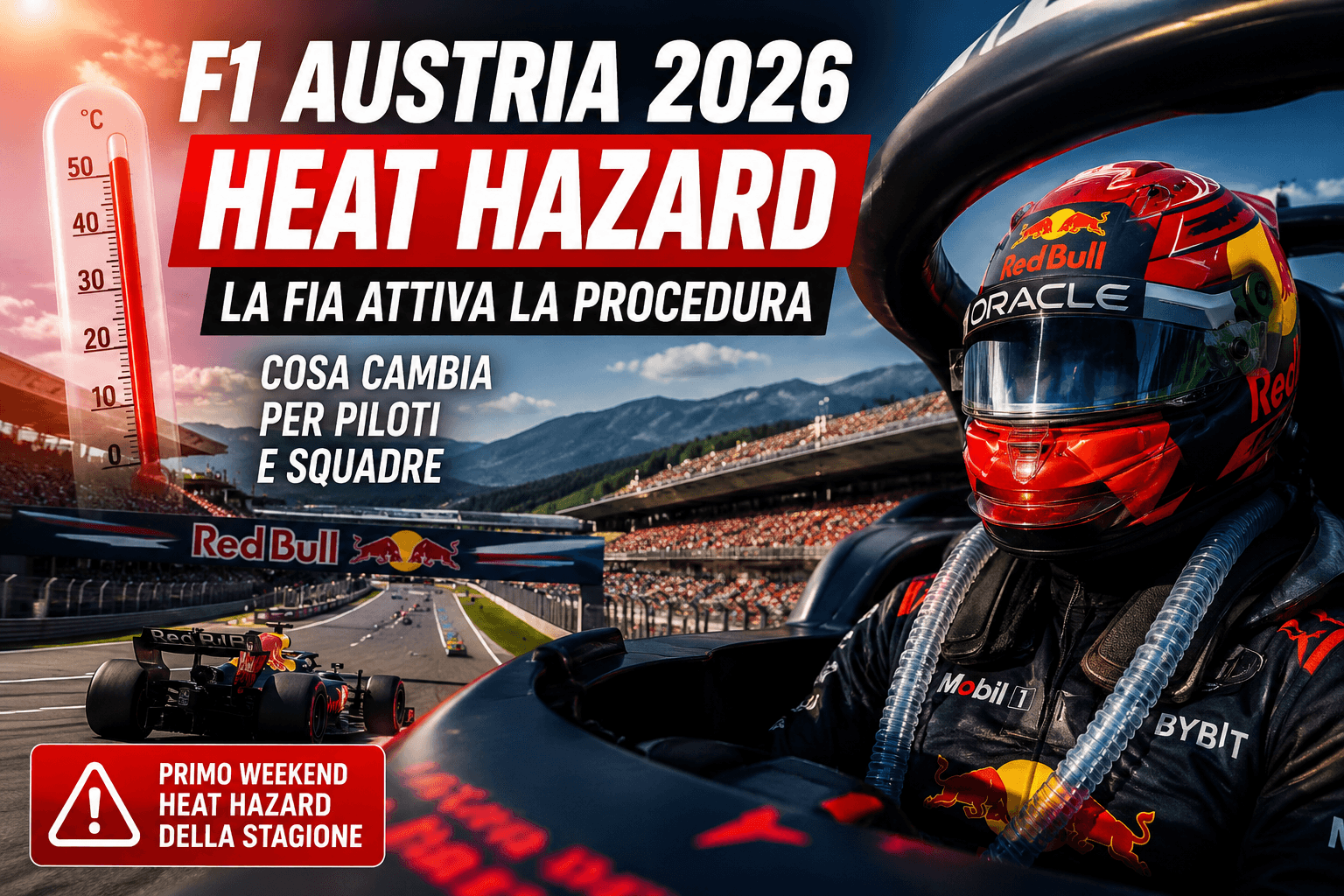
The 2026 Austrian Grand Prix is set to be remembered for more than just the on-track battle. As soaring temperatures are expected to affect the Red Bull Ring throughout the weekend, the FIA has officially declared the event a Heat Hazard, triggering the new safety protocol designed to protect drivers from extreme cockpit temperatures.
It is the first Formula 1 race weekend this season to activate the regulation, highlighting how climate conditions are becoming an increasingly important factor in modern Grand Prix racing. Beyond outright performance, teams will now have to manage an additional challenge that could influence race strategy, tyre degradation, reliability and, above all, driver endurance.
With the championship entering a crucial stage, Spielberg promises to test not only the speed of the cars but also the physical limits of the drivers.
What is the FIA Heat Hazard rule?
The Heat Hazard protocol was introduced following concerns raised by several drivers after competing in extremely hot conditions over the past few seasons. When weather forecasts predict a heat index above the FIA’s safety threshold, Race Control can officially declare a Heat Hazard event.
Once activated, teams are required to install the new Driver Cooling System on their cars. The system circulates cooled fluid through a specially designed cooling vest worn by the driver, helping reduce body temperature during the race and lowering the risk of dehydration and heat stress.
Although the equipment must be fitted to the car, drivers are not obliged to use it. To ensure competitive fairness, the FIA adjusts the minimum car weight during Heat Hazard events so that no team gains a performance advantage by choosing not to run the cooling system.
Drivers have mixed opinions on the new cooling system
While the paddock agrees that driver safety must remain the priority, opinions differ regarding the effectiveness and practicality of the new technology.
McLaren driver Oscar Piastri welcomed the system, explaining that he had specifically prepared for the Austrian Grand Prix by training in high-temperature environments to simulate race conditions. According to the Australian, the cooling vest may not completely eliminate the physical challenge, but it can make a meaningful difference during the most demanding races of the season.
Racing Bulls rookie Isack Hadjar expressed a more cautious view. He admitted that the cooling vest still feels somewhat bulky inside the cockpit and suggested he may choose not to wear it during the race. In his opinion, the most uncomfortable moment comes while waiting on the starting grid, whereas airflow once the car is moving helps drivers cope with the heat.
The differing viewpoints underline that the Driver Cooling System is still evolving and will likely continue to be refined in the coming years.
Why extreme heat could influence the Austrian Grand Prix
Despite being one of the shortest circuits on the Formula 1 calendar, the Red Bull Ring is also one of the most physically demanding. Its combination of heavy braking zones, rapid acceleration and constant elevation changes places significant stress on drivers throughout the race.
High ambient temperatures are expected to increase tyre degradation, forcing teams to carefully manage race pace and pit-stop strategy. Engineers will also have to balance aerodynamic efficiency with additional cooling requirements for the power unit, brakes and hybrid systems.
Driver performance could become equally important. Prolonged exposure to extreme heat leads to dehydration, reduced concentration and slower reaction times, factors that can ultimately decide the outcome of a closely contested race.
Safety continues to shape the future of Formula 1
The Heat Hazard protocol represents one of the FIA’s most significant recent safety initiatives. As Formula 1 expands into regions with increasingly challenging weather conditions, protecting drivers from extreme heat has become a growing priority without compromising the sport’s competitive nature.
Austria will provide the first real-world test of the Driver Cooling System under race conditions. Its effectiveness throughout the weekend will be closely monitored and could influence how frequently the protocol is used during future Grands Prix held in hot climates.
Austria could become a race of endurance as much as speed
The battle at the Red Bull Ring is expected to be decided by more than outright pace. Physical resilience, hydration management and the ability to maintain concentration over race distance may prove just as important as strategy calls or tyre choices.
With the FIA activating the Heat Hazard protocol for the first time this season, the 2026 Austrian Grand Prix offers a glimpse into Formula 1’s future, where technological innovation and driver safety continue to evolve alongside the pursuit of performance.