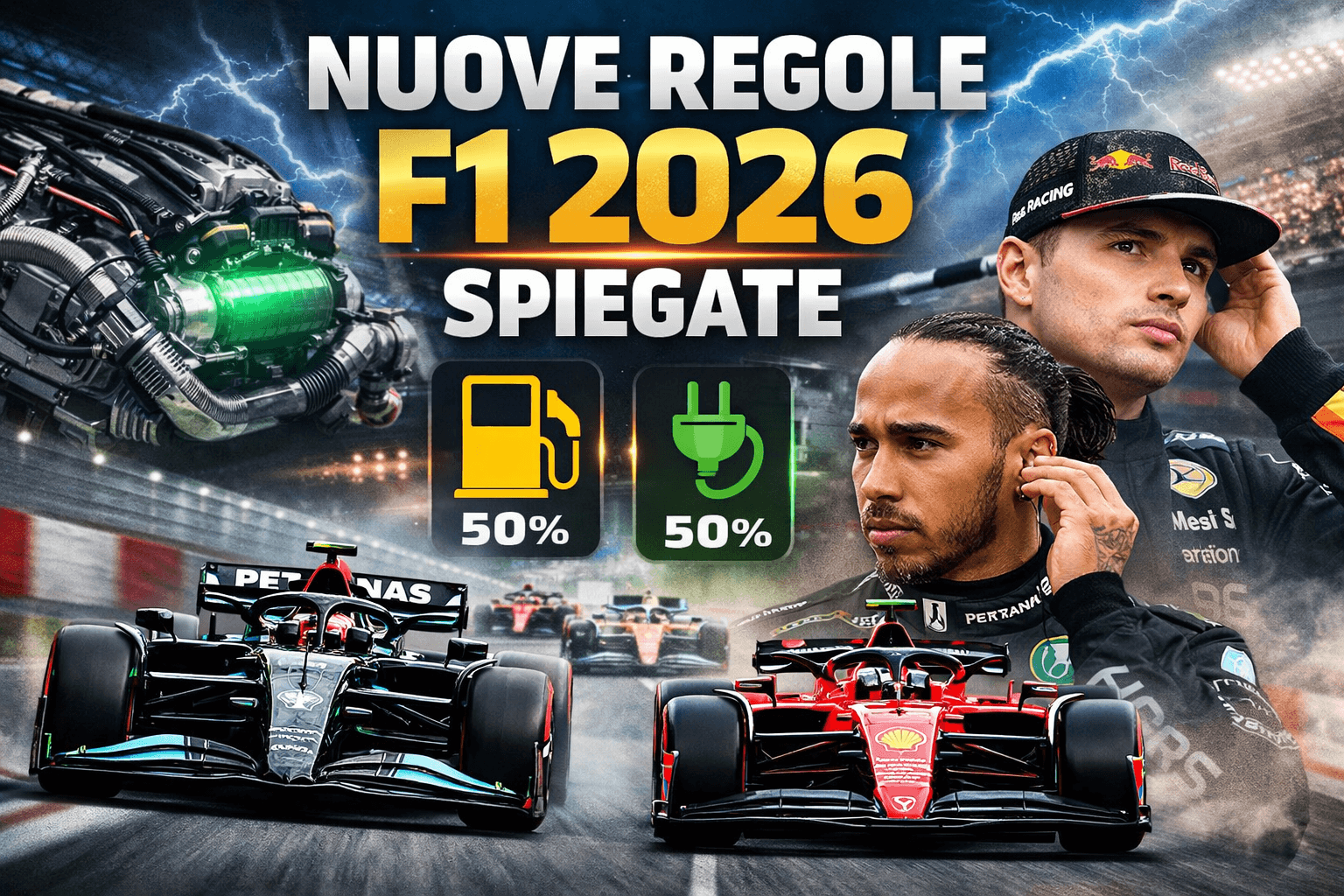
From 2026, the cars will be powered by a completely revised system:
half of the power will come from the V6 turbo internal combustion engine
the other half will be generated by the electric component
It is a huge transformation. If today hybrid is already important, tomorrow it will become central. In practice, Formula 1 is moving ever closer to a balance between performance and sustainability, while trying to maintain its technological identity.
However, this evolution introduces a crucial variable: energy management.
The central issue: energy and performance
When talking about the F1 2026 regulations explained well, the key point is exactly this: it will not only be the fastest who wins, but the one who knows how to manage resources best.
And this is where two concepts destined to become increasingly familiar come into play.
The first is the so-called lift and coast. In simple terms, drivers will be forced to lift off the accelerator before braking to save energy. A technique already seen, but one that could become the norm in 2026.
The second is super-clipping, a situation in which the electric energy runs out before the end of the straight. When that happens, the car loses power right at the moment when it should be attacking or defending.
Taken together, these two elements describe a Formula 1 very different from the one we know: less instinctive, more calculated.
Why many fear a drop in spectacle
It is therefore no surprise that the new F1 2026 rules explained by engineers and drivers are generating more than a few doubts.
In the paddock there is concern that:
drivers will have to think more about saving than performance
overtaking will become more difficult
races will turn into energy management exercises
In recent years, Formula 1 had found the right balance between technology and spectacle. The battles on track had returned to the fore, helped by regulations designed to encourage duels.
With 2026, however, the risk is that of returning to a Formula 1 that is harder to read, where engineering counts more than the driver's instinct.
An inevitable choice (but a risky one)
It must be said: this direction is no coincidence. Formula 1 is trying to evolve in order to remain relevant.
The new rules aim to:
reduce environmental impact
attract new manufacturers
develop technologies useful also for road cars
In this sense, understanding the F1 2026 new rules explained clearly also means understanding the future vision of the championship.
The problem is finding the right balance. Because while it is true that technology has always been the soul of Formula 1, it is equally true that the public is excited by what it sees on track: overtakes, duels, unpredictability.
Why everyone is searching for “F1 2026 new rules explained”
The growing interest in this keyword is no coincidence. When a sport changes so much, the public needs tools to understand it.
And today Formula 1 risks becoming less immediate:
more technical
more strategic
less intuitive for those watching
That is why content offering a simple explanation of the F1 2026 new rules is attracting more and more traffic: it helps bridge the gap between technical complexity and understanding.
Evolution or step backwards?
The real answer will only come on track. 2026 will be a decisive test.
The new rules could open a thrilling new era, or create a Formula 1 that is more efficient but less engaging. Much will depend on how teams and the FIA manage to balance energy, performance and spectacle.
In the meantime, one thing is certain: never more than today has it been essential to understand the F1 2026 new rules explained clearly in order to continue truly enjoying this sport.
Because Formula 1 is changing. And this time, it really is.