Ben Sulayem opens the door to a sensational change of direction: “F1 has to become exciting again”
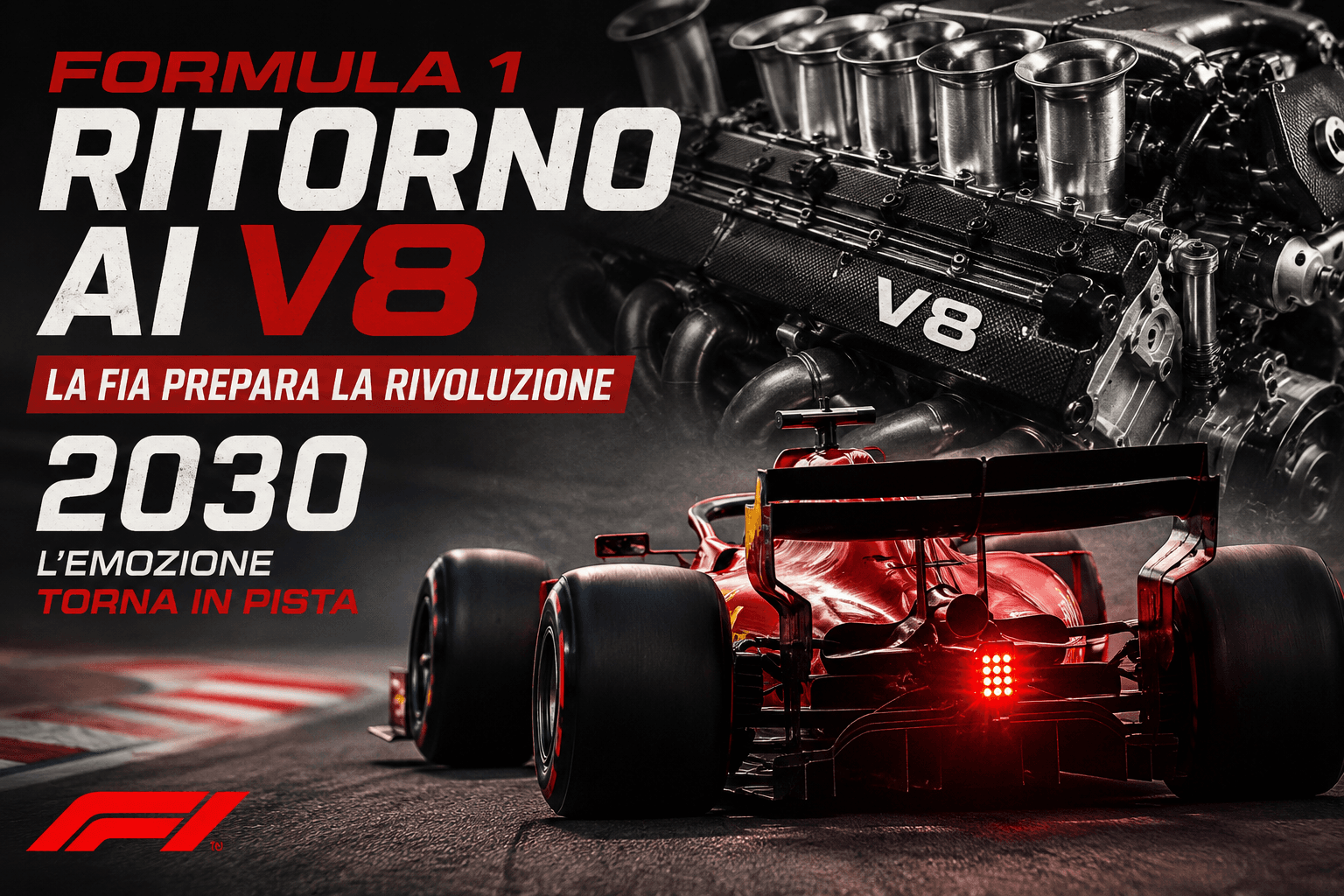
Formula 1 could soon once again embrace the sound that made generations of fans fall in love. The return of V8 engines, in fact, is no longer just a romantic notion linked to the Circus’ past, but a concrete possibility that is gaining momentum in the FIA’s decision-making meetings.
The issue has been put back on the table directly by the president of the International Federation, Mohammed Ben Sulayem, who in recent days has confirmed that the project for a new Formula 1 that is lighter, less expensive and above all more spectacular is already at the centre of discussions between the federation, teams and constructors.
The aim would be to introduce a new generation of power units by 2030, bringing forward the end of the current regulatory cycle scheduled after 2026. A choice born of a precise need: to bring Formula 1 back to the centre of pure emotion.
Formula 1 and V8 engines: why the paddock wants change
In recent years Formula 1 has reached impressive technological levels. The current hybrid power units are genuine masterpieces of engineering, but the price paid has been very high in terms of simplicity, costs and emotional engagement.
Modern cars have become increasingly heavy, extremely complex and heavily dependent on electronic energy management. An aspect that many drivers are beginning to consider excessive.
In the paddock there is growing feeling that the essence of Formula 1 is slowly moving away from what made it legendary. Less aggression on track, greater attention to energy saving and races often dictated by technical management rather than the driver’s pure instinct.
It is in this scenario that the V8 suddenly becomes relevant again.
According to the first reports, the FIA is considering naturally aspirated or semi-hybrid engines powered by sustainable fuels, thus maintaining the category’s green path but drastically reducing the electric component that will characterise the 2026 cars.
The drivers’ criticism pushes the FIA towards change
The statements made in recent weeks by several paddock figures have further heated up the debate.
Lance Stroll was one of the most direct, going so far as to say that driving a Formula 3 car would today be more enjoyable than a modern Formula 1. A strong statement, which says a lot about the growing unease among those who would like lighter, more nervous and less artificial cars.
Other drivers, albeit in different tones, have also highlighted how the management of the current power units now heavily conditions the way they race. Lift and coast, energy recovery and exaggerated electronic strategies are transforming the driver’s role, increasingly called upon to manage rather than attack.
Even Toto Wolff, historically a symbol of the Mercedes hybrid era, has opened the door to a possible review of the future technical project, acknowledging the need to make Formula 1 more engaging for the public.
The FIA’s real objective: lower costs and more spectacle
Behind the idea of bringing back the V8 there is not only nostalgia. The FIA is in fact looking for a solution that can guarantee economic sustainability and competitiveness in the long term.
The current power units require huge investments and are increasing the risk of creating ever more marked gaps between the major manufacturers and the smaller teams. Reducing technical complexity would mean cutting development costs, encouraging new entrants and making the championship more balanced.
But the central issue remains the spectacle.
The sound still represents one of the most iconic elements of Formula 1 today. The roar of the V8s and V10s has remained in the collective imagination of fans as the symbol of an unrepeatable era, made of extreme cars and pure adrenaline.
The FIA wants to recover precisely that emotional connection which has partially faded in recent years.
Formula 1 2030: the new era could start from the past
The future of Formula 1 could therefore be born from a modern reinterpretation of its most glorious history. Not a simple nostalgic return, but a technical revolution designed to combine sustainability, spectacle and sporting identity.
The next seasons will be decisive in understanding which direction the Circus will really take. Much will also depend on the impact of the new 2026 rules, already being observed closely by teams and the FIA.
But one feeling is now clear in the paddock: Formula 1 is once again looking for its heart.
And the roar of the V8 could be the key to finding it again.