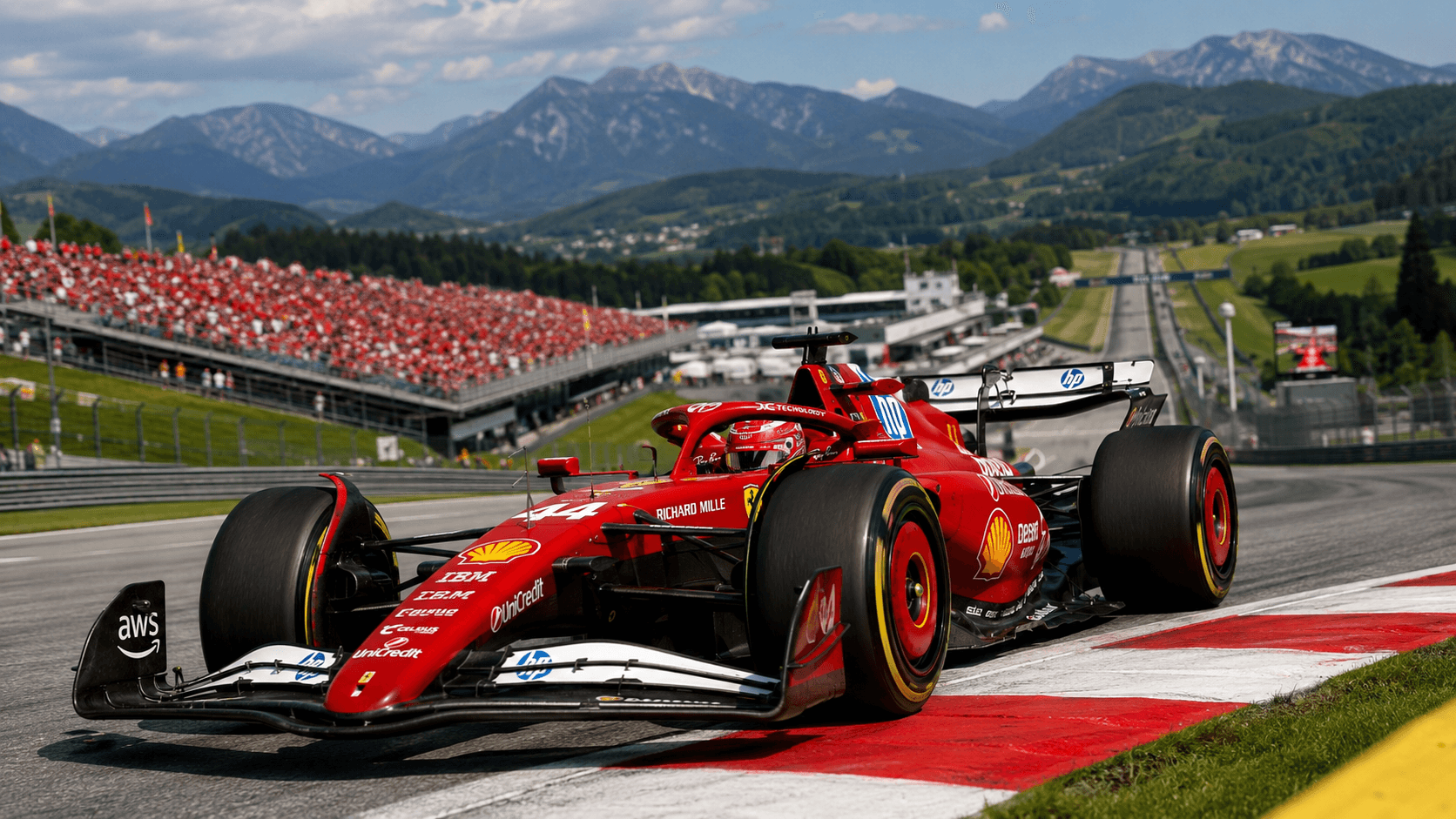
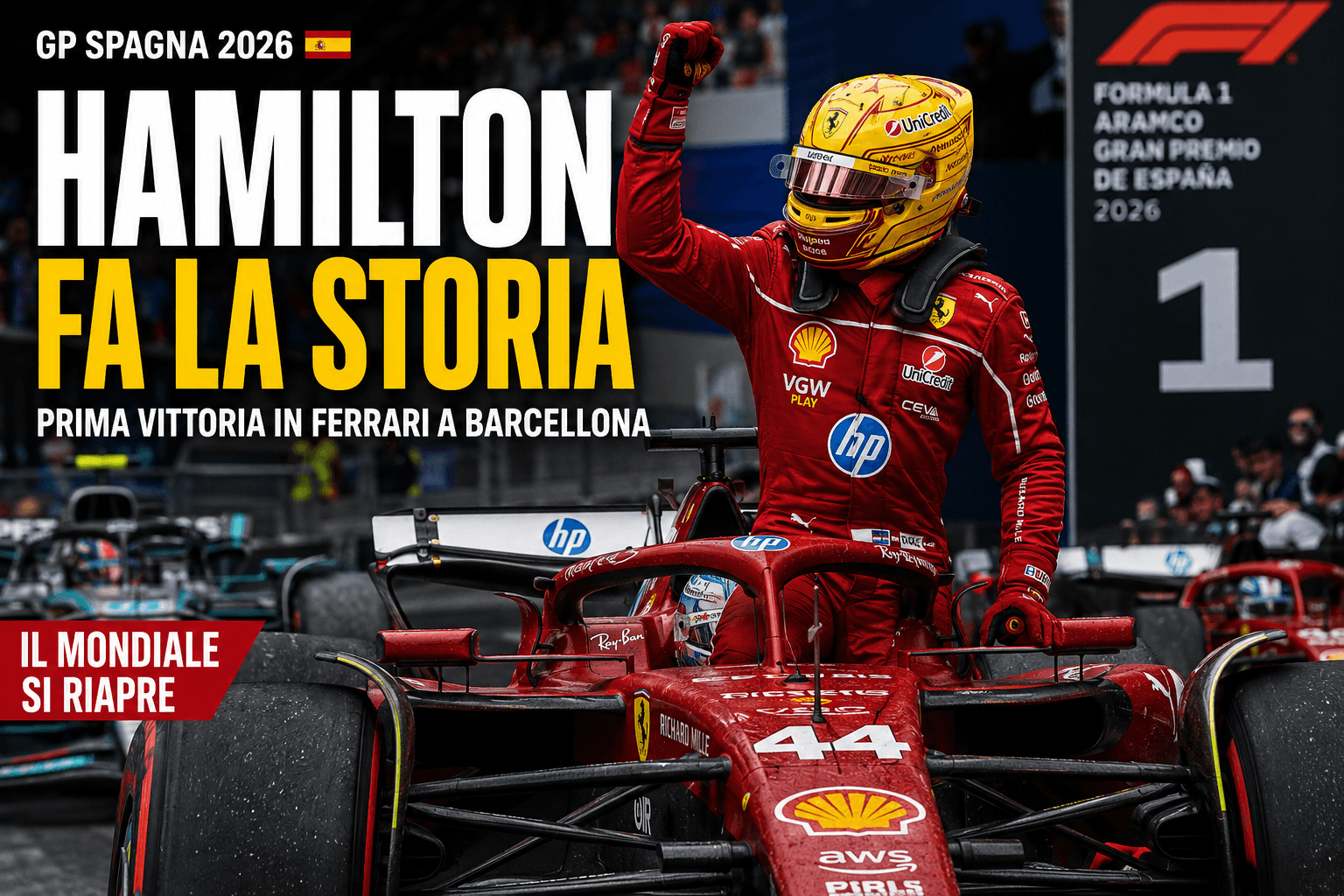
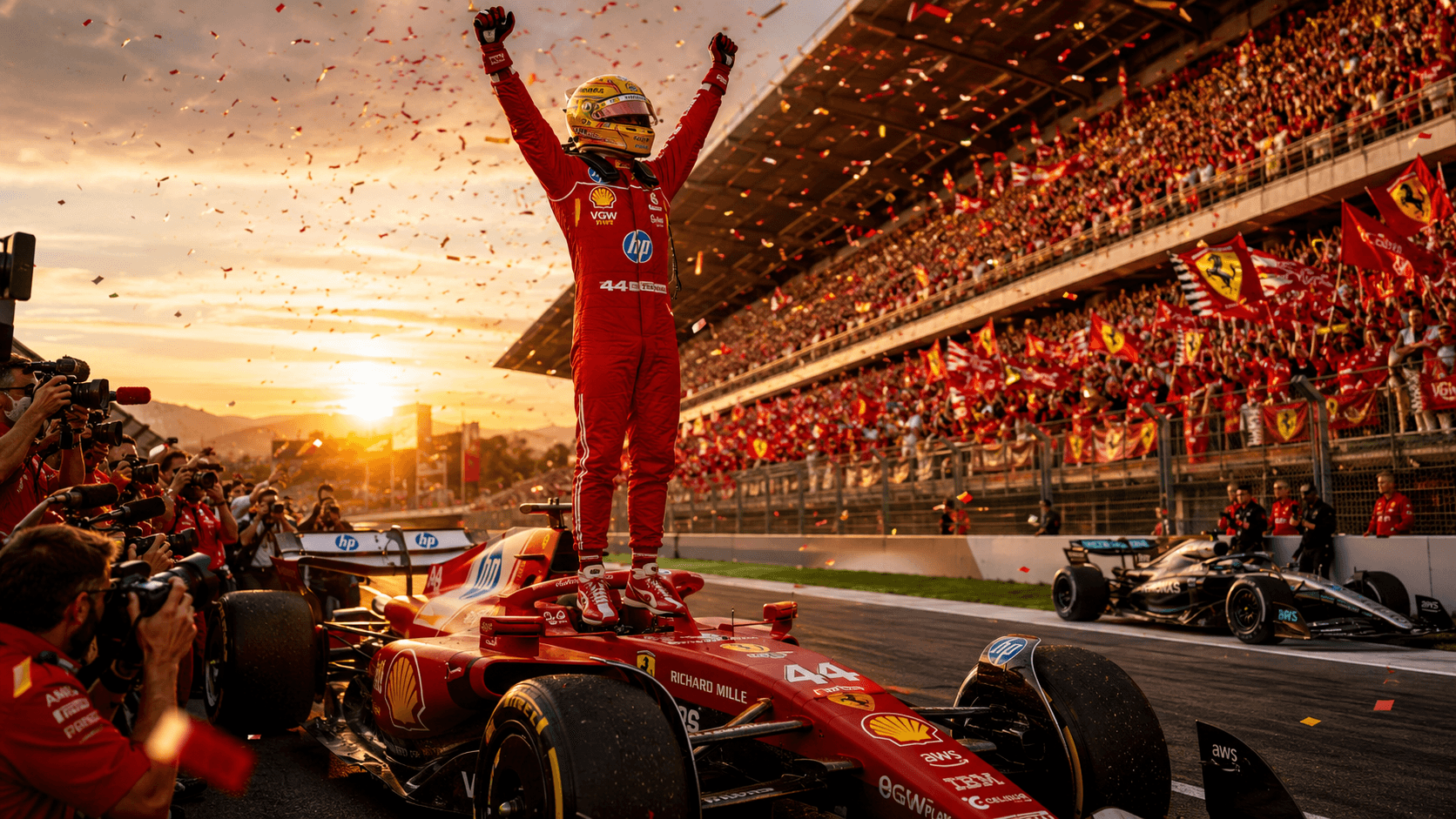
Completing the podium is Lewis Hamilton, who produced a very aggressive race to take his first podium with Ferrari. Behind him finishes Charles Leclerc, after an intense internal duel within the team that animated the second part of the race.
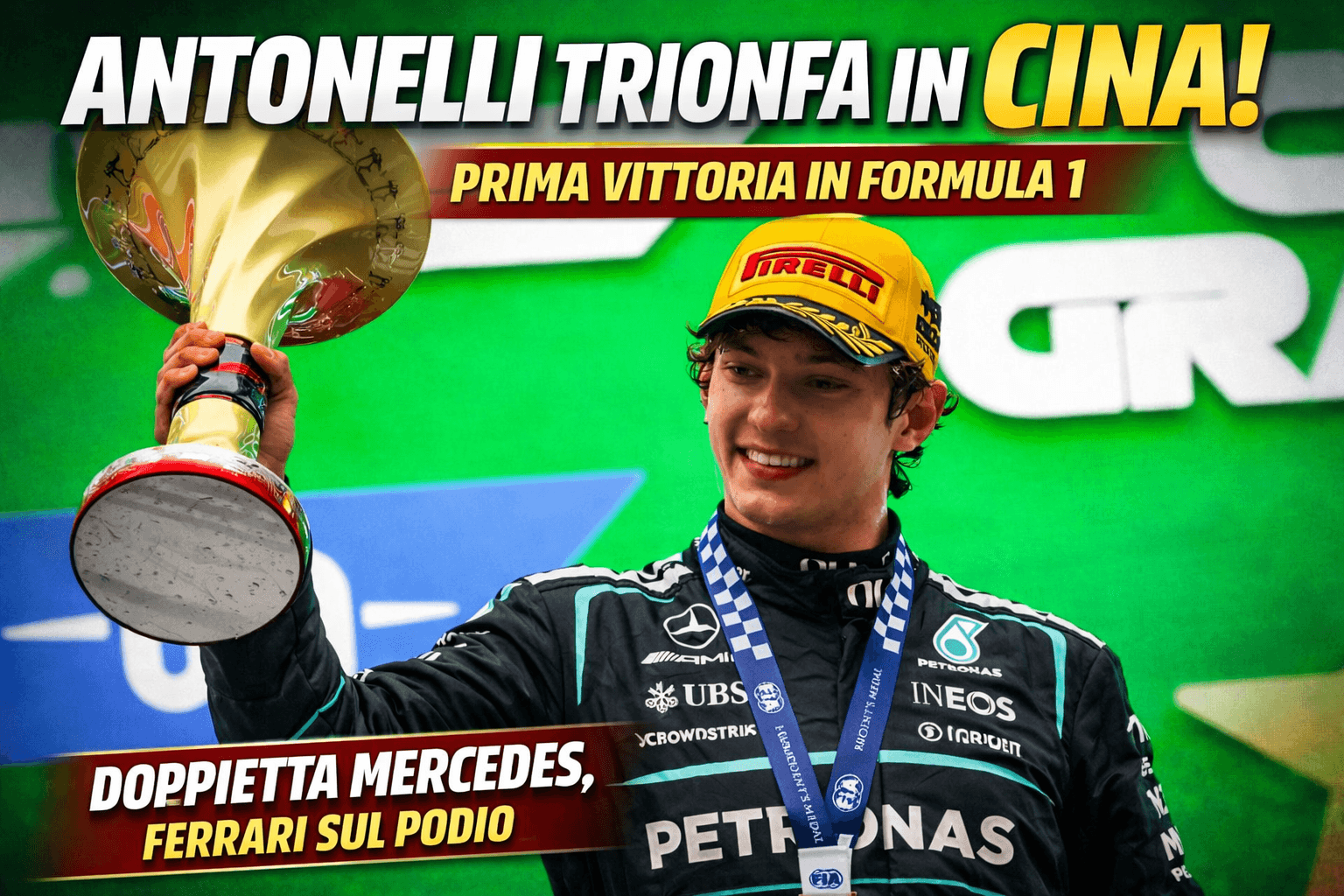
Antonelli’s success also represents a symbolic moment for Italian motorsport: the last victory by an Italian driver in Formula 1 had in fact come almost twenty years ago.
But the Shanghai Grand Prix was not only a historic moment: above all, it was a technically complex race, characterised by different strategies, tyre management and a competitive balance that could shape the entire season.
Drivers’ and constructors’ standings
The start: Ferrari attacks, Mercedes resists
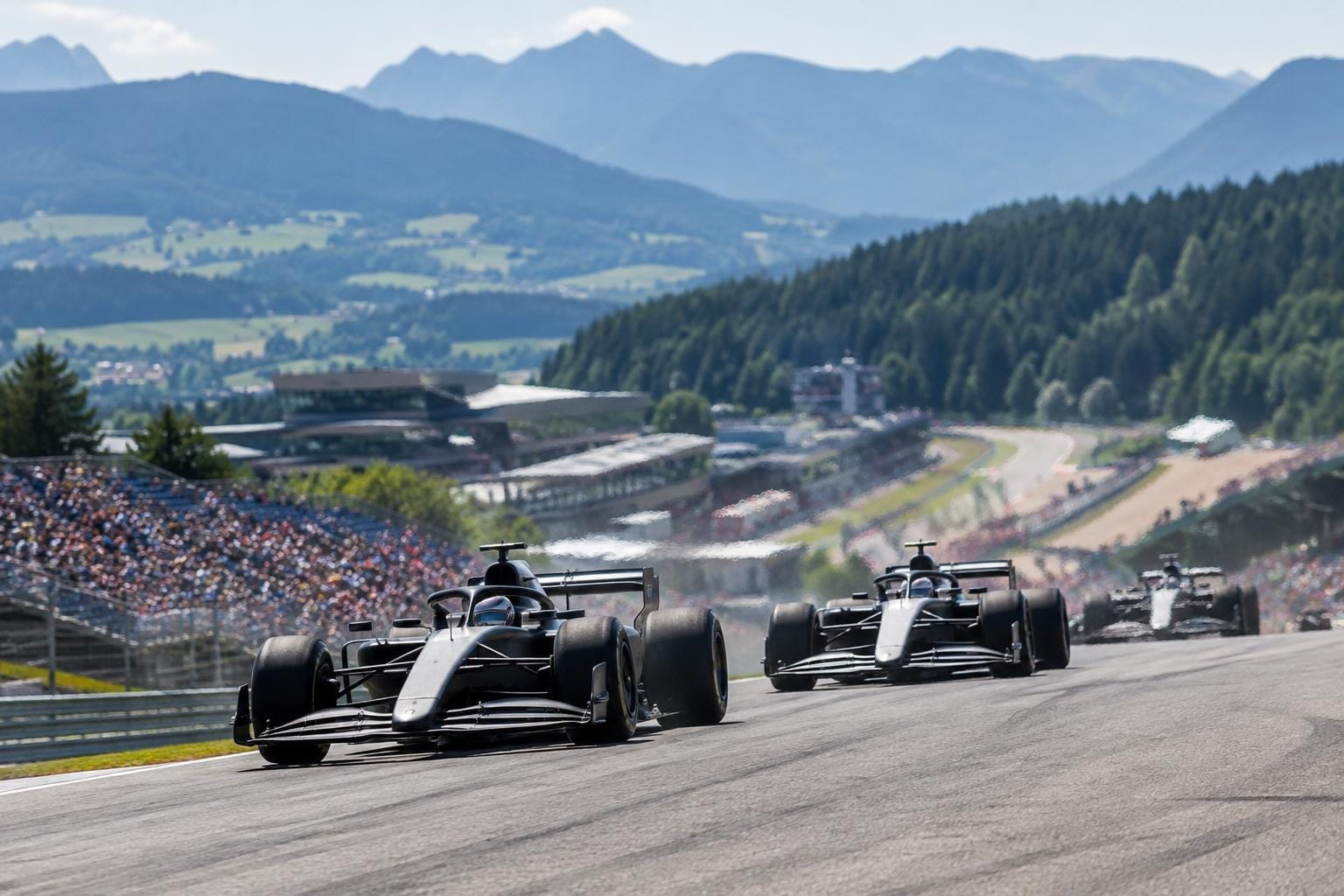
The green light for the Chinese GP comes with Antonelli in pole position, followed by team-mate Russell and the two Ferraris of Hamilton and Leclerc.
The start is one of the most delicate moments of the Shanghai circuit. The long opening straight immediately leads to the famous ever-widening Turn 1, one of the most technical sections of the entire calendar.
Hamilton uses the slipstream perfectly and immediately tries to attack Russell.
The Ferraris show great aggression in the opening metres, while Antonelli manages to keep the lead with a clean start.
The first lap sees four cars separated by just a few tenths.
This early phase immediately shows that Ferrari has a competitive car in the acceleration phases and under braking.
However, Mercedes seems to have something extra on race pace.
F1 Chinese GP 2026, the technical analysis of the race
The Shanghai circuit: one of the most technical on the calendar
The Shanghai International Circuit is often underestimated from a technical point of view.
In reality, it is one of the most complex tracks in the entire World Championship.
Circuit data
length: 5,451 km
corners: 16
race laps: 56
main straight: over 1,2 km
But the real distinguishing feature is the opening corners.
The 1-2-3-4 sequence forms a spiral that requires perfect management of front-end grip.
The cars must deal with a prolonged lateral load that can easily lead to overheating of the front tyres.
For this very reason Shanghai represents one of the toughest tests for:
aerodynamic balance
tyre management
power unit efficiency
The first stint: Mercedes controls the pace
After the start the race quickly enters its strategic phase.
Antonelli sets a very constant pace, lapping on average faster than his rivals.
Russell remains steadily in second place, while Hamilton and Leclerc begin to study the strategy in an attempt to attack Mercedes.
The Ferraris seem particularly competitive under braking.
The SF-26 in fact shows great stability on corner entry.
However, in the middle sector of the circuit Mercedes appears more balanced.
This allows Antonelli to keep a small margin.
The first strategic variable: tyres
One of the key elements of the race concerns tyre management.
Shanghai is one of the most demanding circuits for the front axle.
The long opening corners generate extremely high lateral loads that lead to degradation of the front tyres.
Most teams opt for a strategy:
medium → hard
Mercedes follows exactly this plan.
Ferrari instead tries to push harder in the first stint, seeking to put pressure on Mercedes.
This choice, however, results in slightly higher degradation in the middle phase of the race.
Safety Car: the decisive moment of the race
The first major twist comes around lap 20.
A technical problem on one of the Aston Martin cars brings out the Safety Car.
This situation completely changes the strategic picture.
The teams have to decide quickly whether to pit.
Mercedes reacts immediately:
Antonelli comes in for hard tyres.
The stop is perfect and allows the Italian driver to keep the lead of the race.
Ferrari also pits, but the strategy appears slightly more aggressive.
The difference will emerge in the second half of the race.
The Ferrari duel: Hamilton vs Leclerc
One of the most spectacular moments of the race concerns the internal battle within Ferrari.
Hamilton and Leclerc find themselves fighting for the podium.
The team decides not to intervene with team orders.
The decision from team principal Frederic Vasseur is clear:
to let the drivers race freely.
This gives rise to one of the best duels of the race.
Hamilton uses the slipstream on the back straight and attacks at Turn 14.
Leclerc tries to respond on the next lap.
The two drivers overtake each other several times over the course of several laps.
In the end Hamilton’s experience makes the difference.
The British driver takes third place.
F1 Chinese GP 2026: Mercedes race pace: where the advantage comes from
The real secret of Mercedes in Shanghai is race pace.
Analysing the telemetry data, three main factors emerge.
1. Aerodynamic efficiency
The car is able to generate a lot of downforce without penalising top speed.
This is fundamental on a circuit with long straights like Shanghai.
2. Tyre management
The Mercedes cars are able to keep the tyres in the ideal temperature window for longer than their rivals.
This allows a constant pace.
3. Hybrid system
The circuit’s heavy braking zones allow a lot of energy to be recovered.
The Mercedes energy recovery system seems to be particularly efficient.
Antonelli: a champion’s performance
The real star of the race remains Andrea Kimi Antonelli.
The Italian driver shows surprising maturity for his age.
Throughout the race he stays calm and perfectly manages the pressure from his rivals.
Even in the closing stages, when a small lock-up of the front tyres raises fears of a possible problem, Antonelli manages to keep the situation under control.
The final margin over Russell is around five seconds.
Not a huge gap, but enough to show control of the race.
McLaren and Red Bull: a complicated weekend
Not all teams had a positive day.
McLaren featured in one of the most surprising moments of the weekend.
Both Lando Norris and Oscar Piastri were unable even to take the start of the race because of technical problems.
A double retirement before the lights even went out.
Red Bull also had a difficult race.
Max Verstappen was forced to retire with a mechanical problem.
The Austrian team still seems to be searching for the best balance with the new technical regulations.
The midfield: Formula 1’s hidden battle
Behind the top teams the race offered several interesting duels.
Oliver Bearman stood out with a very solid performance.
Pierre Gasly and Liam Lawson animated the fight for the points zone.
This part of the standings shows just how extremely competitive Formula 1 has become.
F1 Chinese GP 2026: the World Championship standings after Shanghai
After the Chinese GP the championship becomes even more interesting.
George Russell keeps the World Championship lead.
However, Antonelli’s victory significantly cuts the gap.
Ferrari remains fully in contention with Hamilton and Leclerc.
The season promises a very close fight.
A new era for Formula 1
Antonelli’s victory represents much more than a simple sporting result.
It marks the beginning of a new generation of drivers.
The young Italian has shown that he possesses all the qualities to become one of Formula 1’s leading figures in the coming years.
Speed, maturity and race-management ability.
Three characteristics that define the great champions.
If Shanghai was the first chapter of his story, the future of Formula 1 could also speak Italian.
F1 Chinese GP: Russell wins the Sprint, Antonelli takes historic pole ahead of the Ferraris