BYD's slowdown marks a turning point for the EV sector
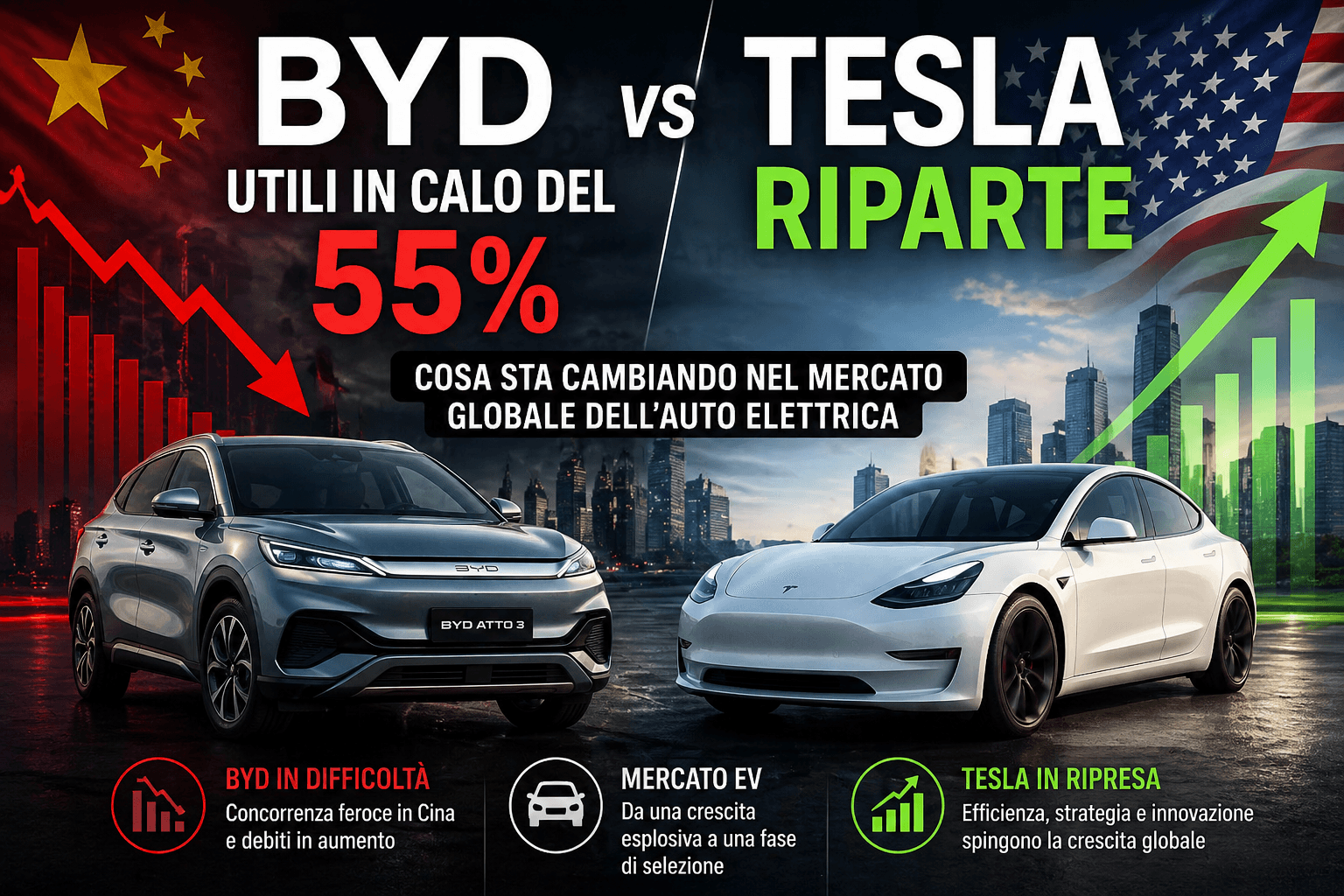
The global electric car market is entering a new phase, and BYD's figures show it clearly. The Chinese giant, leader in sales of electrified vehicles, has recorded a dramatic 55% drop in profits, a sign that goes beyond a simple quarterly downturn and points to a structural transformation in the sector.
After years of sustained growth, driven by domestic demand and support from Chinese industrial policies, BYD now finds itself dealing with a much more competitive environment. Pressure on margins is intensifying, while the strategy based on high volumes and aggressive prices is showing the first signs of strain.
Internal competition and the price war in China
A saturated and hyper-competitive market
China remains the beating heart of the electric revolution, but also the toughest ground for manufacturers. The continuous arrival of new players and the expansion of already established brands have created unprecedented competition. Local producers are adopting extremely aggressive pricing policies, cutting margins in order to win market share.
In this scenario, BYD, while retaining a dominant position, is forced to defend its lead by cutting prices and increasing commercial incentives. A strategy that inevitably affects profitability.
The growing weight of short-term debt
Alongside competitive pressure, the financial issue is emerging strongly. The rapid expansion of recent years has required massive investment in production capacity, research and development and internationalisation. This has led to a significant increase in debt exposure, particularly short-term.
The result is a more fragile financial structure, which limits the company’s room for manoeuvre in a complex market phase. Debt management therefore becomes a strategic priority to ensure sustainability in the medium to long term.
Tesla returns to growth: signs of recovery in the global market
Optimisation and global strategy
While BYD slows down, Tesla is showing concrete signs of recovery. After a period characterised by slowing demand and margin compression, the American company has launched an internal reorganisation focused on operational efficiency.
Improved cost management, together with a more targeted commercial strategy, is helping to strengthen the group's competitiveness in the main international markets.
Innovation and premium positioning
Tesla continues to benefit from a distinctive positioning, based on technological innovation and brand recognition. The software ecosystem, vertical integration and the development of new technologies remain key elements in differentiating itself in an increasingly crowded market.
These factors allow the company to defend margins better than many competitors, even in a context of growing price pressure.
A more selective electric car market
From growth to sustainability
Recent data clearly indicate that the electric car sector is moving from a phase of rapid expansion to one of consolidation. Growth remains, but it is no longer enough to guarantee success: the ability to generate profits sustainably becomes essential.
Companies are being called upon to find a balance between volumes, prices and profitability, avoiding overly aggressive strategies that could jeopardise financial stability.
The challenges for the major players
For BYD, the challenge will be to maintain leadership in China while strengthening its international presence without further increasing pressure on the finances. For Tesla, meanwhile, a favourable phase is opening up to consolidate its global role and tap demand in mature markets.
Future prospects: balance between growth and profitability
The future of the EV market will depend on manufacturers' ability to adapt to a more complex and less forgiving environment. Competition will continue to intensify, but the players able to combine innovation, efficiency and financial solidity will be rewarded.
The fall in BYD's profits and Tesla's recovery are not isolated episodes, but signs of a broader transformation. The race to electric does not stop, but its pace and rules are changing. And in this new phase, only the most resilient business models will manage to emerge.