The Chinese giant's slowdown shakes the electric car market
The first quarter of 2026 marks a significant setback for BYD, the global leader in the electric and plug-in hybrid car sector. After years of almost uninterrupted growth, the Shenzhen group has recorded a sharp drop in revenue and profits, highlighting a change of phase that affects not only the company, but the entire global automotive ecosystem.
The figures tell a clear story: revenue fell by 12%, stopping at around 150 billion yuan, while sales saw an even more significant contraction, of around 30%. The figure on net profit is even more striking, collapsing by more than 55%, a sign of ever-stronger pressure on margins. (Quattroruote.it)
The price war in China changes the balance of the sector
An increasingly competitive market
At the root of the slowdown is a now structural dynamic: the price war in the Chinese market. Growing competition among local manufacturers, combined with the reduction in state incentives, has created an extremely aggressive environment.
In recent years, the subsidy system has supported the growth of the electric segment, but the revision of fiscal policies has radically changed demand. The end of some incentives brought purchases forward into 2024, leaving a void in the following months. The result is a more volatile market, in which manufacturers are forced to compete mainly on price.
Margins under pressure and costs rising
In this scenario, BYD has chosen to defend market share through aggressive commercial policies. However, the reduction in prices, combined with rising costs along the supply chain, has inevitably compressed profitability.
The net profit figure represents the most critical point: this is not just a cyclical downturn, but the sign of a deeper transformation, in which volume growth no longer automatically guarantees high margins.
Europe as the new strategic frontier
Exports growing strongly
Faced with an increasingly complex domestic market, BYD is accelerating decisively on international expansion. Sales abroad have already reached almost half of the total, confirming how exports have become the real engine of development.
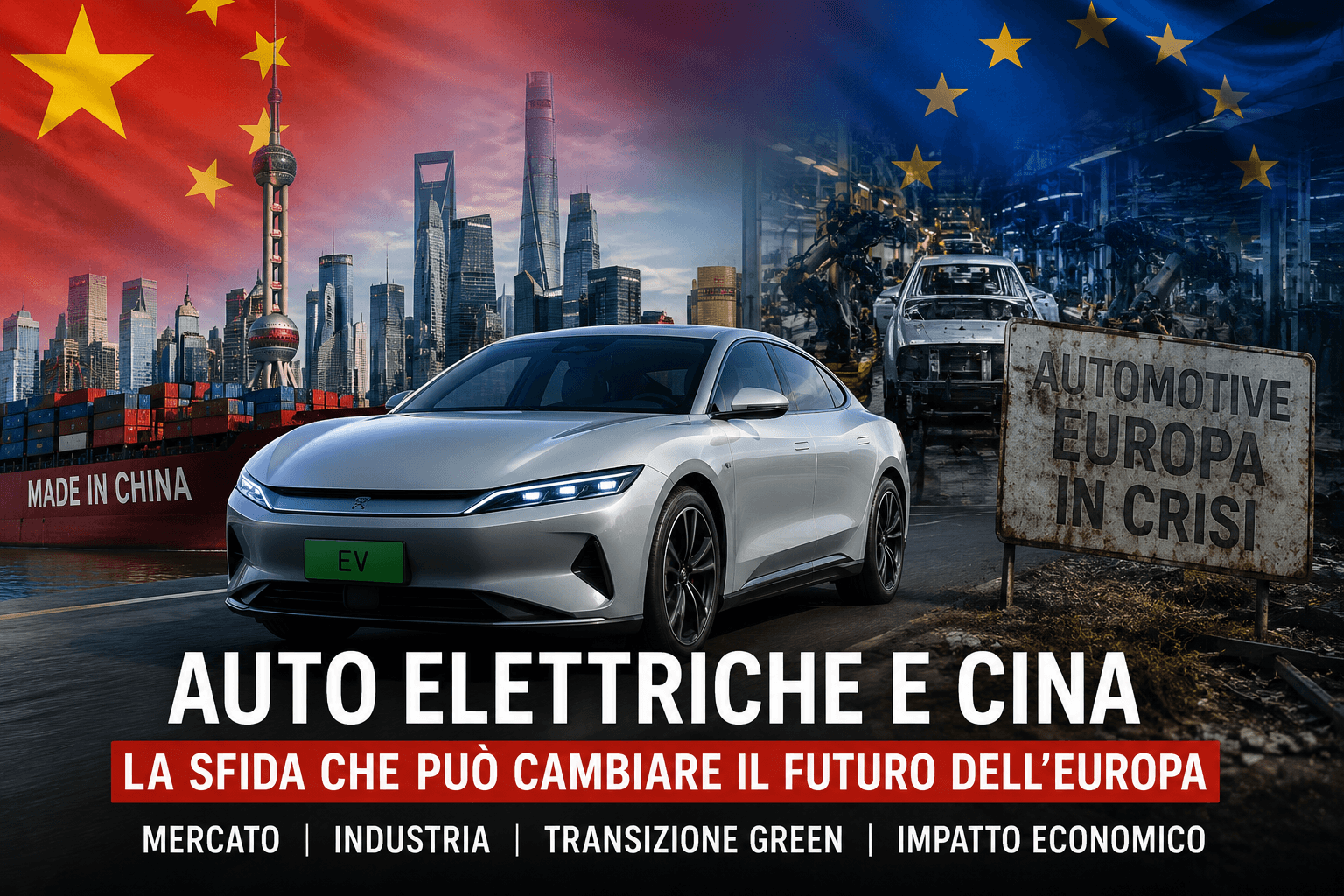
Europe is now the main area for expansion. The group has strengthened its commercial presence and is investing in building an increasingly widespread network, with the aim of getting closer to local customers and competing directly with the continent's historic brands.
Industrial strategy and localisation
The approach is not only commercial. BYD is also aiming for local production, with new plants already underway or under development in Europe and emerging markets. This strategy makes it possible to reduce logistics costs, bypass any trade barriers and improve the brand's image.
Localisation therefore becomes a key element in facing a mature and highly competitive European market, where quality, reliability and territorial presence play a decisive role.
Technological innovation and the challenge to global manufacturers
Despite the financial slowdown, BYD continues to invest in innovation. The introduction of new technologies, such as second-generation batteries with extremely long range and ultra-fast charging, shows the intention to maintain a position of technological leadership.
This approach allows the Chinese group to position itself not only as an affordable alternative, but as a direct competitor to European premium brands. The challenge therefore shifts from price to technology, with an increasingly complete and sophisticated offer.
Towards a new phase of the automotive industry
Consolidation and natural selection
The BYD case reflects a broader transformation of the Chinese automotive sector. The extremely high number of active manufacturers, many of them with marginal shares, makes a consolidation process inevitable.
Estimates indicate that in the coming years only a few large groups will manage to survive, while dozens of brands could exit the market. In this context, BYD remains one of the strongest players, but it is being called on to redefine its growth model.
The balance between volume and profitability
The real challenge for the future will be to find a balance between global expansion and economic sustainability. The era of unchecked growth seems to be giving way to a more mature phase, in which efficiency, margins and strategic positioning become central.
Europe, in this scenario, is not just an outlet market, but a decisive testing ground. This is where BYD will have to prove it can compete not only on price, but also on quality, innovation and brand value.
A signal that concerns the whole market
BYD's slowdown is not an isolated case, but a symptom of a structural change. The electric car sector is entering a more complex phase, where global competition is intensifying and the rules of the game are evolving rapidly.
For the Chinese manufacturer, the challenge has only just begun. And the outcome will determine not only its future, but also the balance of the entire global automotive industry.