Car prices in Italy exceed 30,000 euro: what is really happening
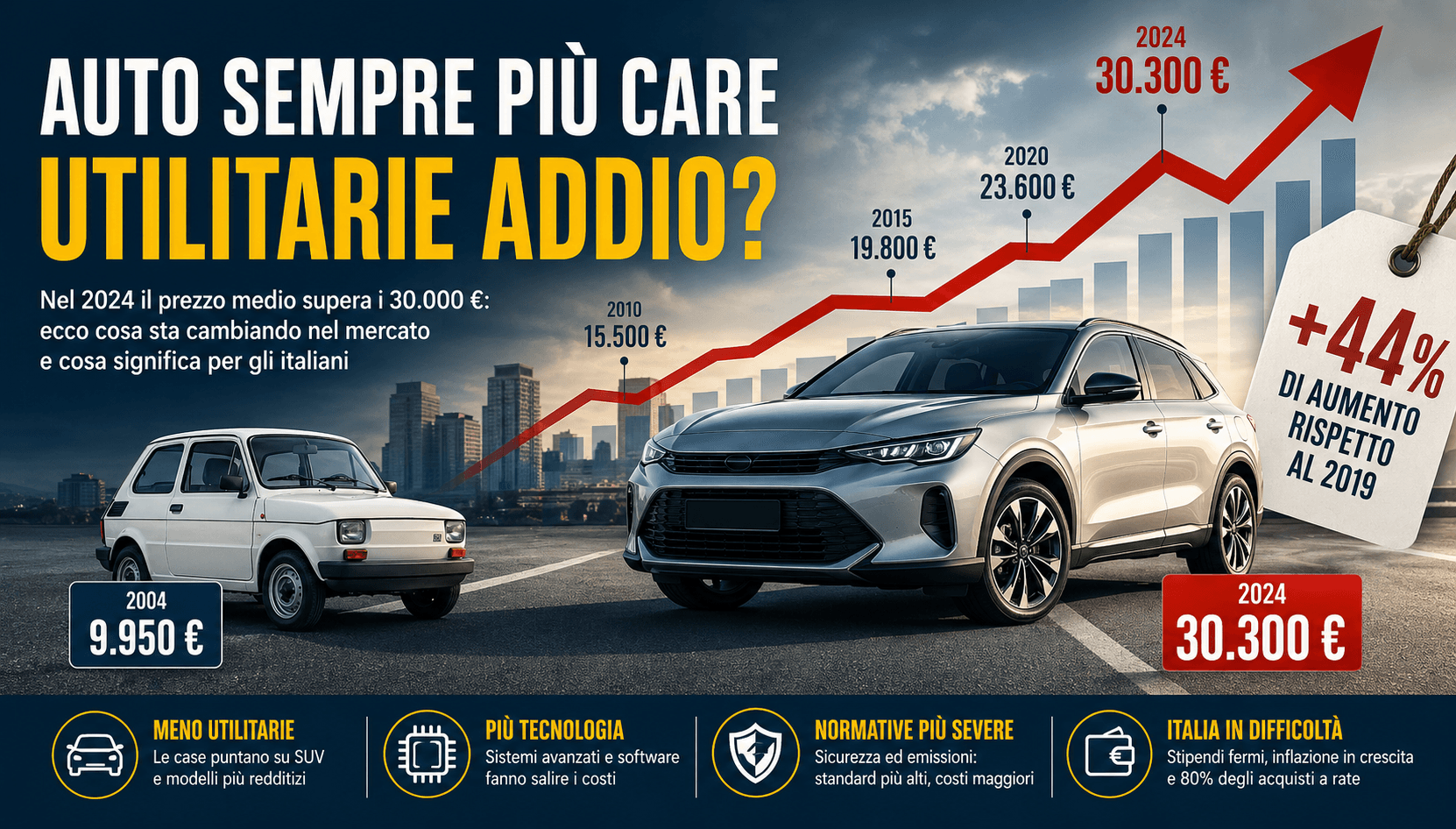
The European car market, and the Italian one in particular, is undergoing a structural transformation that risks completely redefining the very concept of “a car for everyone”. The latest data confirm a trend that is now clear: vehicles below 20,000 euro are increasingly rare, while the average price of a new car exceeded the 30,000 euro threshold in 2024. A significant jump compared with the roughly 21,000 euro in 2019, which certifies growth far faster than the increase in incomes.
This is not simply sector-specific inflation, but a profound change in the automotive industry, which is progressively abandoning the city car segment to shift towards more profitable and technologically advanced models.
From city cars to SUVs: the change in strategy of carmakers
In recent years, manufacturers have progressively reduced the offer of entry-level models, concentrating investment and production on SUVs and crossovers, segments characterised by higher margins. This phenomenon is evident in European price lists, where many historic city cars have been removed or profoundly repositioned towards higher price brackets.
At the same time, electrification is helping to raise prices even further. Platforms dedicated to electric cars require substantial investment, and battery costs still have a decisive impact on the final price. Hybrid models, now widespread across almost all ranges, also involve greater technical complexity than traditional combustion engines.
The result is a market increasingly oriented towards mid-to-high-end products, where the entry price continues to rise.
Technology, safety and regulations: the factors driving costs up
The technological evolution of cars is one of the main drivers of price increases. Increasingly sophisticated driver-assistance systems, advanced infotainment, connectivity and over-the-air software updates are now standard even on compact models.
Added to this are the increasingly stringent European regulations on safety and emissions reduction. The mandatory introduction of ADAS devices, together with tighter environmental standards, has significantly increased development and production costs.
These elements, while improving safety and efficiency, have inevitably contributed to making cars less accessible for an ever-growing share of the population.
A global problem: from the United States to Europe
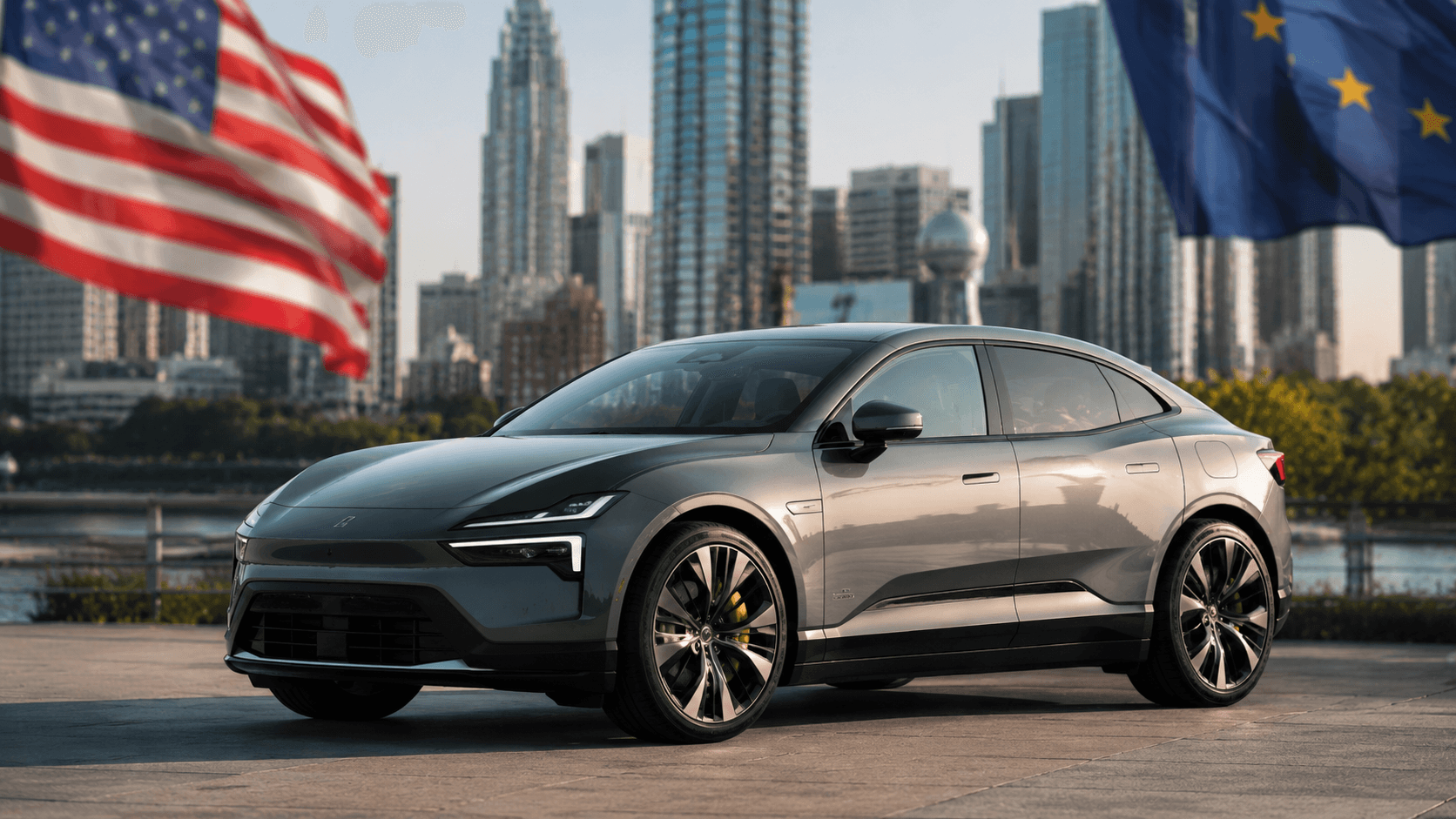
Price growth does not concern Italy alone. In the United States, according to the latest analyses reported by the international press, the average price of a new car has reached around 50,000 dollars, while finding models under 20,000 dollars has become extremely difficult.
This global scenario highlights how the phenomenon is linked to shared industrial and technological dynamics, rather than local factors. However, in Italy the impact is amplified by a unique territorial and social structure.
Italy: the car remains a necessity, but it is increasingly less accessible
In the Italian context, characterised by a strong presence of small towns and a public transport system that is often insufficient, the car is still an essential good. It is no coincidence that around 80% of purchases are made through financing, a sign of growing difficulty in buying outright.
The problem is intertwined with stagnant wages and the erosion of purchasing power due to inflation. If twenty years ago a city car cost around 10,000 euro, today the price has at least doubled, without incomes having followed the same pace.
The future of mobility: between ownership, leasing and new solutions
Faced with this scenario, the future of mobility in Italy appears increasingly hybrid. On the one hand, there is growing use of the used-car market and financing options; on the other, alternatives such as long-term rental and shared mobility services are becoming more widespread.
However, these solutions are not yet able to fully replace the need to own a car, especially in less urbanised areas. The concrete risk is that of increasingly polarised mobility, where access to new cars becomes a privilege for a few.
The risk of a return to the car as something “not for everyone”
The automotive industry now faces a crucial challenge: combining innovation, sustainability and economic accessibility. Without a reversal of the trend, the risk is that we will witness a return to the past, when the car was not a common good but a status symbol.
The question that remains open is simple yet central: will the market succeed in bringing the car back within reach of the middle class, or are we entering a new era in which private mobility will be increasingly selective?