Bike market ·
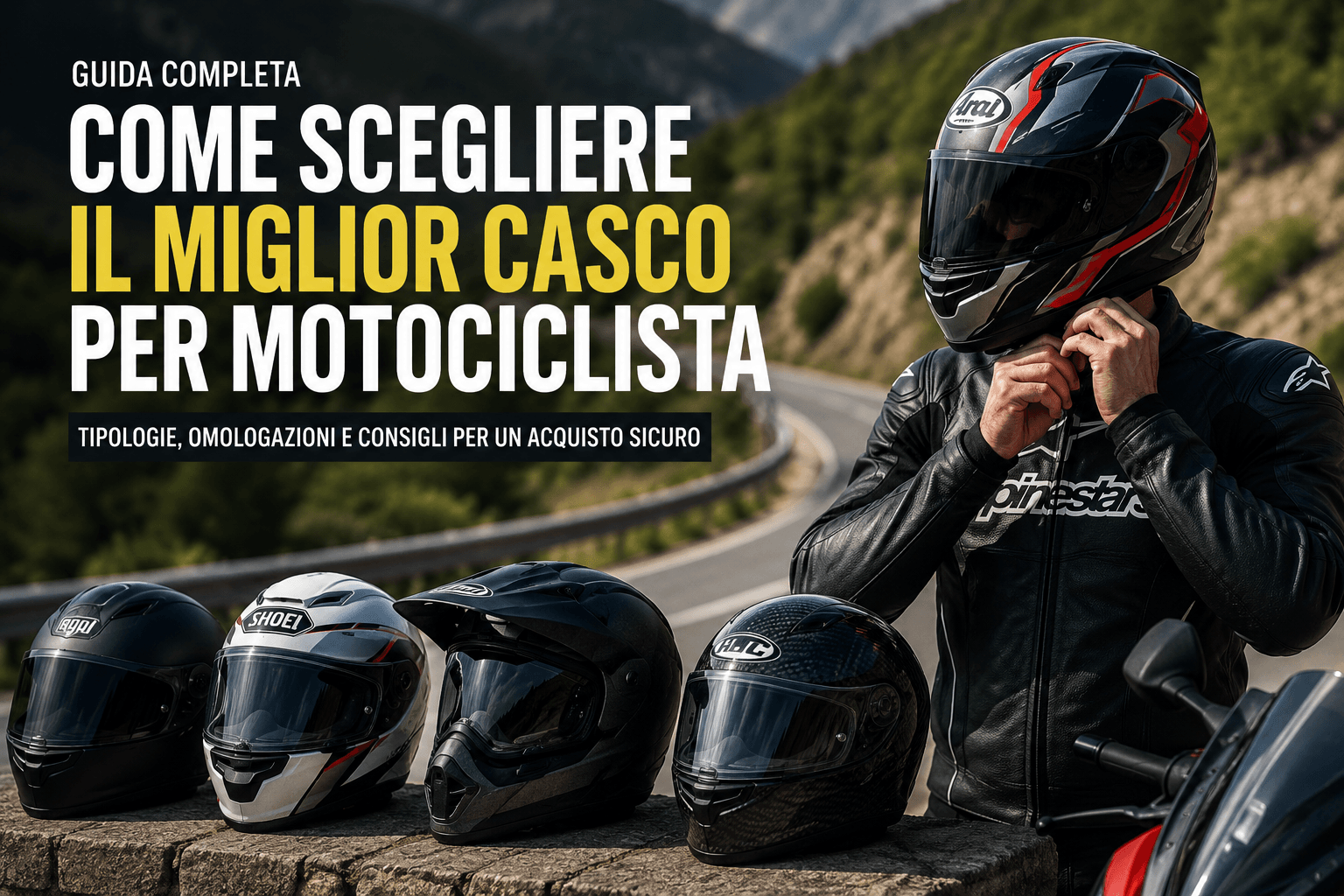
How to choose the best motorcycle helmet: a complete guide to types and approvals
Discover how to choose the perfect motorcycle helmet: a guide to types, approvals and tips for a safe purchase.
Motorsport Magazine
Bike market ·
A day on track can cost hundreds of euros. With an Ohvale you can train more often, spend less and improve your riding.
Ultimogiro Newsroom · 11 June 2026 · 5 min read
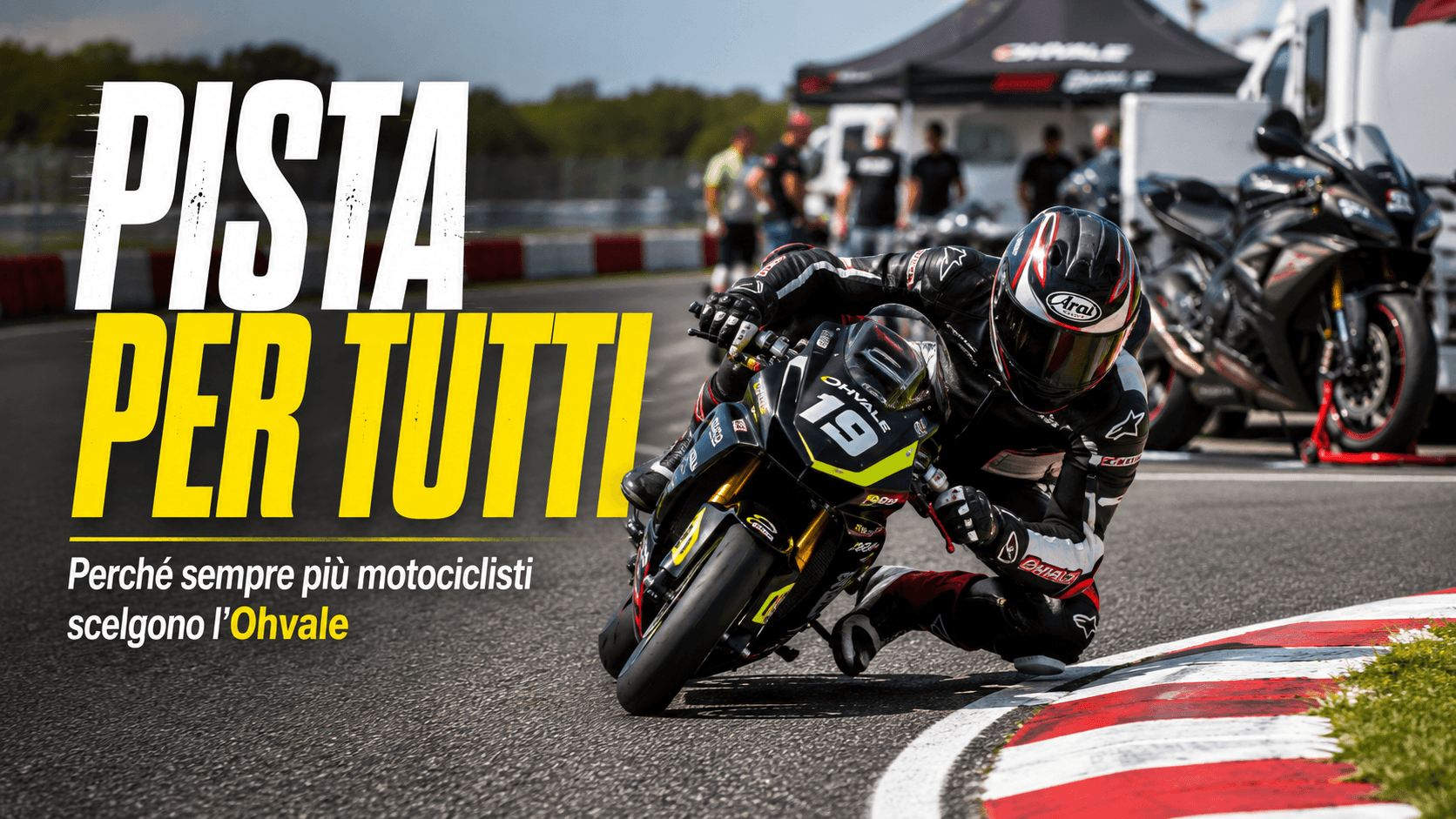
For many motorcycle enthusiasts, the track represents the ultimate dream. Being able to ride without speed limits, improve your technique and experience the thrill of competition is something every motorcyclist wants to try at least once. The problem is that in recent years the costs of track days have risen significantly, making this passion increasingly inaccessible to those on a limited budget.
Between tyres, fuel, maintenance, transport and entry fees, a day at the circuit can quickly turn into a major expense. It is precisely in this context that Ohvales are experiencing extraordinary growth. Born as training bikes for young talents, they have now become one of the favourite training tools for both professionals and amateurs who want to have fun and improve without emptying their bank account.
Those who go to circuits on a supersport bike know the situation well. A modern 600 or 1000 cc requires high-performance tyres, braking systems that are always efficient and constant maintenance to guarantee reliability and safety.
Added to this are the costs of transporting the bike, the fuel needed to get through the whole day and the inevitable wear of all the components put under stress during track use.
Another element to consider is the risk of a crash. Even a simple slide can cause damage worth hundreds or thousands of euros among fairings, levers, footrests and mechanical components.
Many motorcyclists end up limiting the number of track days during the season, also reducing the chances of improving their riding technique.
To understand the Ohvale phenomenon, it is enough to compare the average costs of a day on track.
Let’s take as a reference a production sports bike such as a Yamaha R6, a Kawasaki ZX-6R or a Ducati Panigale V2. The entry fee for a track day alone can vary between 150 and 250 euros. On top of that, you have to add fuel, transporting the bike and tyre wear.
A set of sports tyres has a cost that can range between 350 and 500 euros and, especially for those who ride with a certain frequency, it may need replacing after just a few outings. Taking into account brake pads, servicing and routine maintenance as well, the real cost of a single day on track can easily exceed 300 euros, reaching in some cases close to 500 euros.
With an Ohvale, the picture changes radically. Kart tracks generally have much lower access costs than traditional circuits, often between 30 and 70 euros for a whole day. Consumption is kept to a minimum, tyres cost considerably less and maintenance is far cheaper.
In practical terms, many owners manage to spend a full day on track for between 50 and 100 euros in total.
This means that with the budget needed to do five or six track days on a superbike, it is possible to take part in more than twenty training days with an Ohvale.
The philosophy of the small Italian bike is simple: maximise time in the saddle and minimise expenses.
Its compact dimensions make it possible to use kart tracks, facilities that are widespread across the country and generally more accessible than circuits. Transport is also much simpler and less expensive.
The real strong point, however, is the balance between fun and learning. Although it develops less power than a superbike, the Ohvale offers authentic riding sensations and requires precision, feel and technique.
Every corner becomes an opportunity to improve and every mistake is immediately felt by the rider.
One of the most surprising aspects is that Ohvale bikes are not used only by amateurs. More and more professional riders are choosing them as a training tool between one race and the next.
The reason is simple. On a MiniGP, technique counts more than power. Body position, smoothness of riding, throttle control and precision of lines become fundamental elements.
Many riders say that sessions on these bikes have helped improve feel for the front, corner speed and the ability to quickly identify mistakes.
It is a concept very similar to karting for car riders: lower speeds than more powerful machines, but a huge amount of technical lessons.
One of the most common misconceptions is the belief that Ohvale bikes are reserved for youngsters competing in youth championships.
The reality is completely different. Today in the paddocks of kart tracks you can meet motorcyclists of every age, from the naked, sportsbike and even superbike worlds.
The modern models are available in configurations suitable even for adult riders and allow effective training regardless of age or experience.
The aim is not to replace a large-capacity bike, but to support it with a tool that allows you to train more often and at significantly lower cost.
What convinces most amateurs is not just the money saved.
The real advantage is the opportunity to ride much more.
With low running costs, it becomes possible to go to the track regularly, build experience and improve your technique without the constant worry of wearing out tyres worth hundreds of euros or facing high expenses at every outing.
For those who really want to grow as a rider, the number of hours spent in the saddle matters much more than the top speed achieved on the straight.
At a time when practising sport motorcycling is becoming increasingly expensive, Ohvales are bringing the most important concept of all back to the centre: having fun riding.
They do not reach the speeds of a superbike and do not deliver the adrenaline of a straight of over 300 km/h, but they allow you to experience the track consistently, quickly improve your technique and spend a fraction of what a traditional bike would require.
For many amateur motorcyclists they now represent the smartest way to enter the world of track days without turning a passion into a prohibitive investment. And perhaps that is precisely the secret of their increasingly evident success in paddocks across Europe.
Next story
Bike market ·
Discover how to choose the perfect motorcycle helmet: a guide to types, approvals and tips for a safe purchase.
Bike market ·
Bike market ·
CIV ·
Car market ·
MotoGP ·